
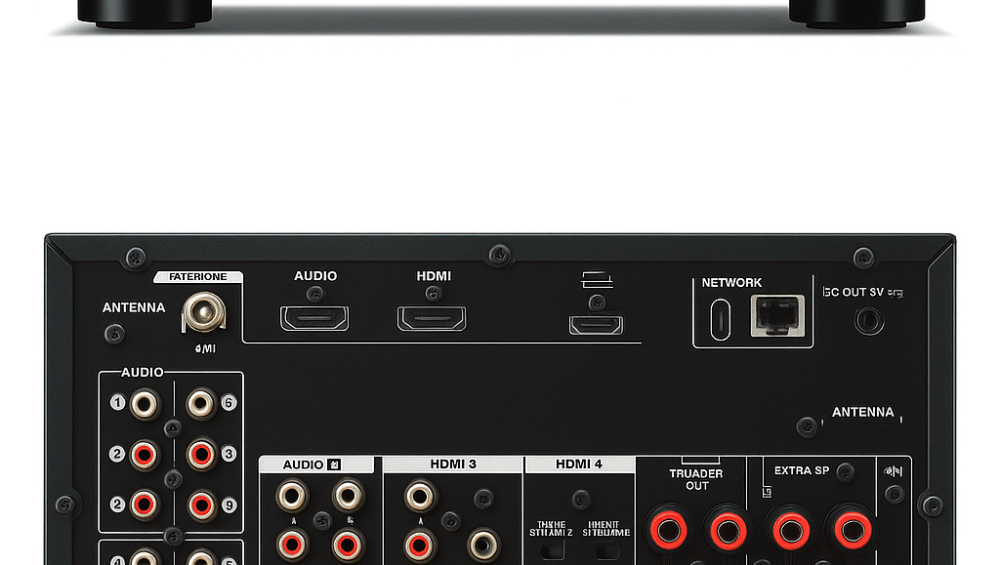
For those who want power, precision, and smart home features without overspending, midrange AV receivers give the best balance of performance and value. In 2025, two models stand out in this category: the Yamaha RX-V6A and the Denon AVR-S970H. Both include Dolby Atmos, HDMI 2.1, 4K/120Hz gaming support, and voice assistant compatibility — all for under $1,000.
In this guide, we compare the top midrange AV receivers side by side, highlighting Yamaha and Denon’s strengths. We’ll also look at which option works best for gamers, movie fans, and smart home users.
Key Features of Midrange AV Receivers
When looking at the best midrange AV receivers, these features make them a smart choice in 2025:
7.2 channel configuration with upgrade potential for future expansion.
HDMI 2.1 support with VRR, ALLM, and eARC for smooth gaming and streaming.
Dolby Atmos and DTS:X deliver immersive 3D audio for movies and music.
Smart home compatibility with Alexa, Google Assistant, and Siri for voice control.
Reliable room calibration ensures balanced sound tailored to your room.

Yamaha RX-V6A – A Standout in Midrange AV Receivers
The Yamaha RX-V6A is one of the most reliable midrange AV receivers in 2025, balancing power, features, and smart home support.
7.2 channels with 100W per channel for dynamic surround sound.
3 HDMI 2.1 inputs and 1 output with full support for next-gen devices.
Handles 4K/120Hz gaming and 8K passthrough with ease.
Supports Dolby Atmos, DTS:X, and Dolby Vision for immersive visuals and audio.
Works with Alexa, Google Assistant, AirPlay 2, and Spotify Connect.
Room calibration with YPAO adapts audio to your space.
Managed through the MusicCast app for multiroom streaming and control.
✅ Best For: Music lovers, Alexa users, and anyone seeking reliable performance from a midrange AV receiver.

Denon AVR-S970H – A Strong Contender in Midrange AV Receivers
The Denon AVR-S970H is another excellent option among midrange AV receivers, offering versatility for both gaming and home cinema setups.
7.2 channels with 90W per channel for clear, powerful audio.
6 HDMI inputs and 2 outputs, with 3 HDMI 2.1 ports for next-gen devices.
Handles 8K/60Hz, 4K/120Hz, VRR, and ALLM for smooth visuals and gaming performance.
Supports Dolby Atmos, DTS:X, and IMAX Enhanced for immersive surround sound.
Works with Alexa, Google Assistant, Siri (via AirPlay), and HEOS multiroom streaming.
Room calibration with Audyssey MultEQ ensures balanced sound in any room.
Controlled through the HEOS app for streaming and multi-zone management.
✅ Best For: Gamers, cinephiles, and users who want powerful app control with advanced calibration.

Yamaha RX-V6A vs Denon AVR-S970H – Head-to-Head
When choosing between the best midrange AV receivers, two models often lead the discussion: the Yamaha RX-V6A and the Denon AVR-S970H. Both deliver strong performance, but each has unique strengths.
Feature Comparison Table
| Feature | Yamaha RX-V6A | Denon AVR-S970H |
|---|---|---|
| Power (per channel) | 100W | 90W |
| HDMI 2.1 Ports | 3 in / 1 out | 3 in / 1 out |
| Room Calibration | YPAO | Audyssey MultEQ |
| App Control | MusicCast | HEOS |
| Voice Assistant Support | Alexa, Google, Siri | Alexa, Google, Siri |
| Music Streaming | AirPlay 2, Spotify | AirPlay 2, Spotify |
| Gaming Features | ALLM, VRR, QMS | ALLM, VRR, QFT |
✅ Quick Verdict:
Yamaha RX-V6A – Slightly more power per channel and the MusicCast ecosystem, making it ideal for multiroom audio lovers.
Denon AVR-S970H – Strong Audyssey room calibration and QFT gaming support, perfect for gamers and home theater fans.

Which Midrange AV Receiver Should You Choose?
When comparing midrange AV receivers like the Yamaha RX-V6A and Denon AVR-S970H, the best choice depends on your needs as a gamer, movie fan, or music lover.
🎮 Gamers
Both models support 4K/120Hz, VRR, and ALLM, making them ideal for next-gen consoles.
Denon AVR-S970H has slightly better HDMI stability with the PS5 and Xbox Series X.
🎥 Home Theater Buffs
If movies are your focus, each receiver brings unique advantages.
Yamaha RX-V6A offers DSP sound modes that enhance cinematic soundtracks.
Denon AVR-S970H includes IMAX Enhanced and stronger video upscaling features.
🎶 Music Lovers
For music playback, both receivers deliver excellent performance with different sound profiles.
Yamaha is praised for its warm, neutral tone, great for long listening sessions.
Denon delivers more impactful bass, often preferred by modern music fans.
✅ Final Takeaway: Both the Yamaha RX-V6A and Denon AVR-S970H are top midrange AV receivers under $1,000. Gamers and cinephiles may prefer Denon, while music-first users and Alexa households may lean toward Yamaha.

Other Notable Midrange AV Receivers
While the Yamaha RX-V6A and Denon AVR-S970H lead the category, several other midrange AV receivers are worth considering depending on your setup.
Marantz NR1510 – A slim-profile receiver that fits perfectly in smaller rooms or media consoles.
Onkyo TX-NR6100 – THX Certified, with HDMI 2.1 support and a Zone 2 output for multiroom audio.
Pioneer VSX-LX305 – Offers DTS:X Pro, HDMI 2.1, and is Dirac Ready for advanced room calibration.
✅ Why it matters: These alternatives compete strongly with Yamaha and Denon midrange AV receivers, giving buyers more flexibility based on room size, audio priorities, and calibration needs.
Final Verdict: Midrange AV Receivers
Both the Yamaha RX-V6A and the Denon AVR-S970H are excellent midrange AV receivers priced under $800–$900 in 2025. Each offers strong performance and can serve as the centerpiece for a mid-sized home theater or gaming setup.
✅ Choose Yamaha RX-V6A if you:
Prioritize long-term reliability and a clean MusicCast app interface.
Want superior music fidelity for daily listening.
Rely on Alexa or MusicCast for voice and app control.
✅ Choose Denon AVR-S970H if you:
Need more HDMI inputs and gaming-ready features like VRR and ALLM.
Prefer Audyssey room calibration for precise tuning.
Value HEOS multiroom audio for flexible streaming.
⚖️ Bottom Line: Both receivers are standout picks in the midrange AV receivers category. Yamaha appeals most to music lovers and Alexa households, while Denon is the stronger choice for gamers and calibration enthusiasts.