In the rapidly growing smart soundbar market, competition has become fierce — yet few models balance value and audio fidelity as well as the Sonos Beam Gen 2 and the Vizio M-Series 5.1.2. Both offer immersive Dolby Atmos performance, sleek designs, and tight smart-home integration while staying under $500 in 2025.
However, when it comes to everyday use and ecosystem fit, the real question becomes: which one fits your home best? In this detailed Beam Gen 2 vs Vizio M-Series comparison, we’ll explore how each soundbar performs in terms of setup, soundstage, connectivity, and smart features — helping you decide which delivers the best balance of clarity, convenience, and cost for your apartment or living-room theater.
Feature Comparison: Beam Gen 2 vs Vizio M-Series
| Feature | Sonos Beam Gen 2 | Vizio M-Series 5.1.2 |
|---|---|---|
| Dolby Atmos | ✅ Immersive, virtualized 3D audio | ✅ True height-channel Atmos experience |
| Voice Assistant | Alexa, Google Assistant, Siri (via AirPlay 2) | Alexa-compatible only |
| Wireless Surround Speakers | ❌ (Sold separately) | ✅ Included in box |
| HDMI eARC | ✅ Fast, lossless audio connection | ✅ Full ARC/eARC support |
| Wi-Fi Streaming | ✅ AirPlay 2, Spotify Connect | ✅ Chromecast Built-in + Bluetooth |
| Price | ~ $449 | ~ $399 |
💡 Transition Insight:
While both models deliver Dolby Atmos immersion, the Vizio M-Series 5.1.2 wins on included surround hardware, whereas the Sonos Beam Gen 2 excels in multi-assistant voice control and a more refined wireless ecosystem through AirPlay 2 and Spotify Connect.
Sound Performance Breakdown: Beam Gen 2 vs Vizio M-Series
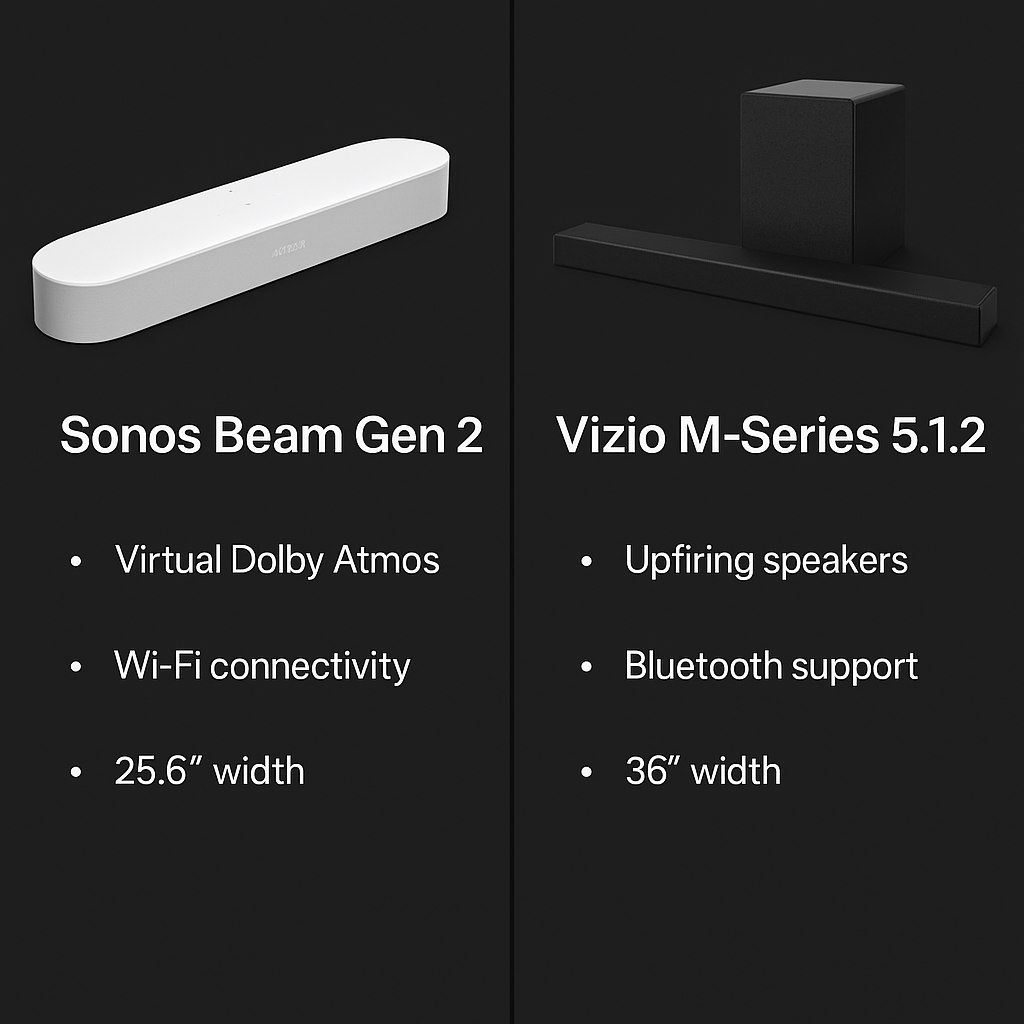
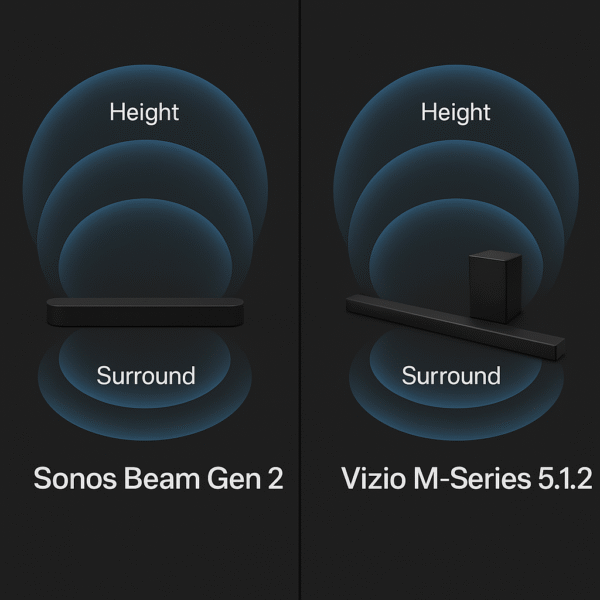
To begin with, the Sonos Beam Gen 2 proves that great things truly come in small packages. Despite its compact frame, it delivers a powerful five-speaker array capable of filling bedrooms or apartments with balanced, room-filling sound. Moreover, its virtualized Dolby Atmos processing uses clever up-firing sound-wave manipulation to create the illusion of height without needing additional speakers. When tuned with Trueplay (available on iOS), vocals become crystal clear, and the bass response feels impressively rich for its size.
By contrast, the Vizio M-Series 5.1.2 focuses on realism through hardware-based height channels. Its real up-firing Atmos speakers, dedicated wireless subwoofer, and rear surrounds make it a stronger choice for users seeking a cinematic experience in medium-to-large rooms. However, while it produces greater spatial depth, its midrange clarity can sound slightly less refined than the Beam Gen 2’s finely tuned signature.
👉 Verdict:
If you value clarity, smart tuning, and compact design, the Sonos Beam Gen 2 is ideal. But if you prefer true 3D immersion and physical surround separation, the Vizio M-Series 5.1.2 takes the lead.
Smart Features & Connectivity
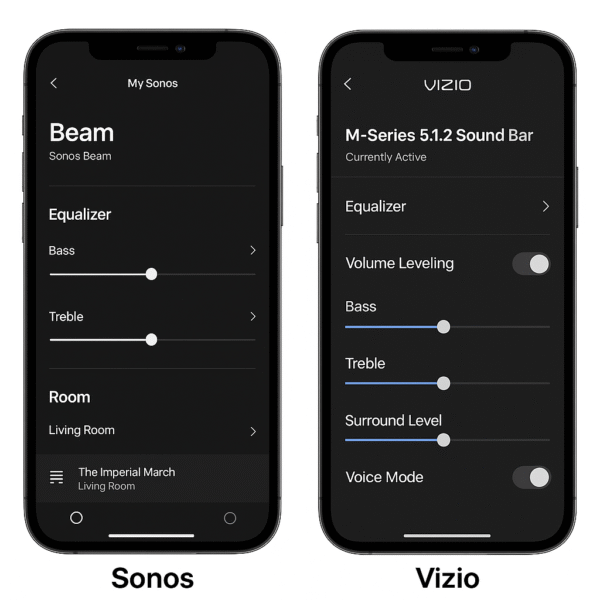
When it comes to smart functionality, the Sonos Beam Gen 2 clearly leans toward seamless ecosystem integration. Through the Sonos app, users gain access to multiroom audio, detailed EQ adjustments, and simple volume and playback control across rooms. Furthermore, it effortlessly connects with Apple HomeKit via AirPlay 2, while also offering built-in Alexa and Google Assistant for direct voice control. As a result, it fits perfectly into any existing Sonos ecosystem, expanding into a synchronized whole-home sound experience.
In contrast, the Vizio M-Series 5.1.2 focuses more on versatility than ecosystem depth. It uses the SmartCast app with Chromecast support, allowing easy streaming from Android and Chrome devices. While it works with Alexa speakers, it lacks built-in microphones, meaning all voice commands must be routed through an external smart speaker. Additionally, Bluetooth streaming is quick and reliable, but it comes with slightly lower fidelity compared to Wi-Fi-based systems. Lastly, multiroom audio is not natively supported—though advanced users can achieve it through third-party workarounds.
👉 Verdict:
For those prioritizing smart home integration and native voice control, the Sonos Beam Gen 2 stands out. However, renters or casual users seeking flexible streaming options and stronger value may find the Vizio M-Series a practical choice.
Best Use Cases: Beam Gen 2 vs Vizio M-Series
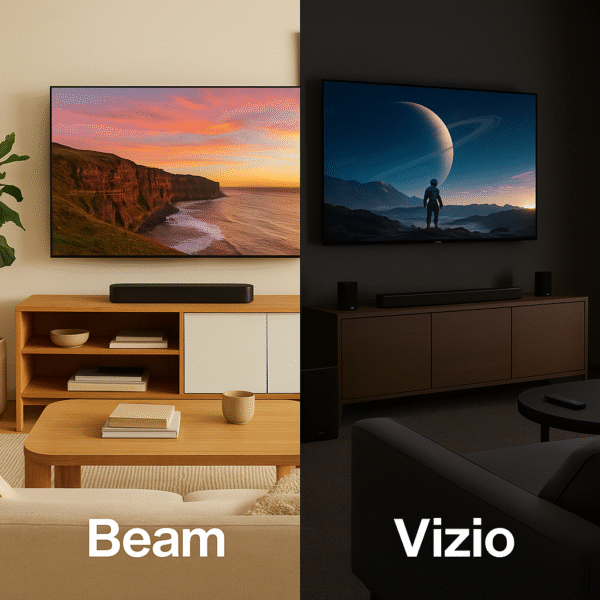
When comparing Beam Gen 2 vs Vizio M-Series, the right choice depends on how — and where — you plan to enjoy your entertainment setup. Each soundbar excels in different scenarios, balancing convenience, performance, and spatial design.
| Use Case | Winner | Why It Excels |
|---|---|---|
| Apartment or Bedroom | Sonos Beam Gen 2 | Its compact design and built-in voice control make it ideal for smaller living spaces. |
| Dedicated Home Theater Room | Vizio M-Series | The included subwoofer and rear speakers create an immersive surround experience. |
| Multiroom Audio Setup | Sonos Beam Gen 2 | Integrates seamlessly with other Sonos devices through the Sonos app and AirPlay 2. |
| Bass and Height-Driven Movies | Vizio M-Series | Real upfiring Atmos speakers and a wireless sub deliver deeper, more cinematic sound. |
👉 Verdict:
If you live in a smaller home or apartment, the Sonos Beam Gen 2 wins for simplicity and integration. However, if your goal is to recreate theater-grade sound with true Dolby Atmos depth, the Vizio M-Series 5.1.2 delivers the most immersive experience in its class.
Setup & Installation
When it comes to setup, Beam Gen 2 vs Vizio M-Series shows two very different approaches — one designed for simplicity and the other built for immersive performance.
Sonos Beam Gen 2
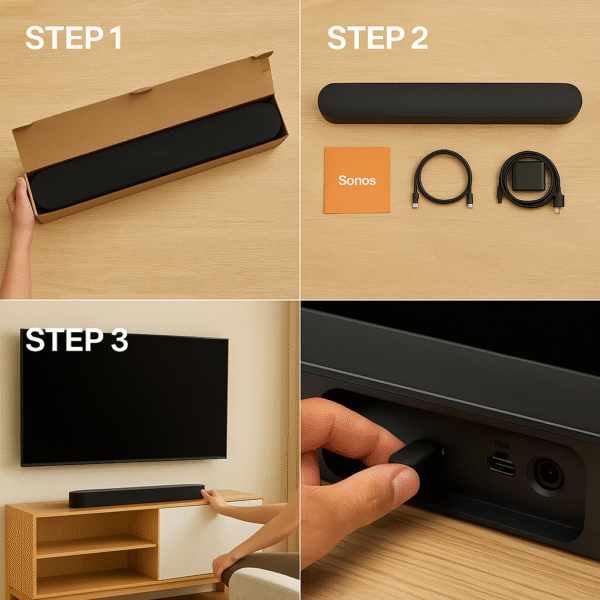
Setting up the Beam Gen 2 couldn’t be easier. It connects through a single HDMI eARC cable, automatically syncing with most modern TVs. The Sonos app guides you step-by-step, making it nearly foolproof even for first-time users. Additionally, it supports an optional wall mount, allowing flexible placement without clutter.
Vizio M-Series 5.1.2
In contrast, the Vizio M-Series requires a bit more effort. While initial setup is straightforward, the extra surround speakers and subwoofer demand proper placement and cable management. On the plus side, Vizio includes mounting hardware in the box, giving users the freedom to create a more permanent and theater-like installation.
👉 Verdict:
If you value plug-and-play convenience, the Sonos Beam Gen 2 wins hands down. But if you don’t mind a few extra steps for cinematic depth, the Vizio M-Series rewards you with a truly immersive 3D soundstage.
Verdict: Which One Is Right for You?
When deciding between the Beam Gen 2 vs Vizio M-Series, the right choice depends on your space, priorities, and smart home setup.
Choose the Sonos Beam Gen 2 if you:
Want a minimalist setup that blends smart design with premium sound.
Prioritize voice assistant integration through Alexa, Google Assistant, or AirPlay 2.
Already own Sonos speakers or plan to expand into a larger Sonos ecosystem later.
Choose the Vizio M-Series 5.1.2 if you:
Prefer true surround sound with a dedicated subwoofer and real upfiring speakers.
Have extra space for a multi-speaker layout and cable management.
Want cinematic performance at a budget-friendly price without sacrificing Dolby Atmos depth.
👉 Final Verdict:
If smart convenience and sleek design top your list, go for the Sonos Beam Gen 2.
But if you crave full-bodied, room-filling audio and tangible surround immersion, the Vizio M-Series 5.1.2 is the better buy.