Voice Assistants & Smart Displays

Shield TV vs Firestick: Gaming Performance Showdown

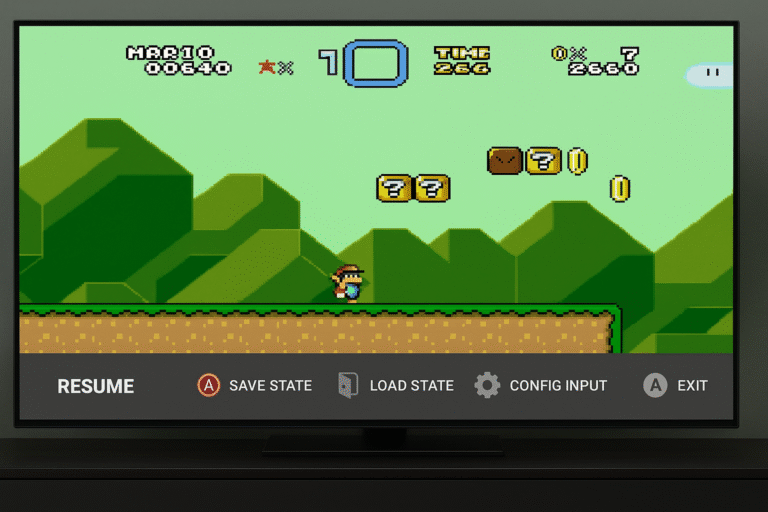
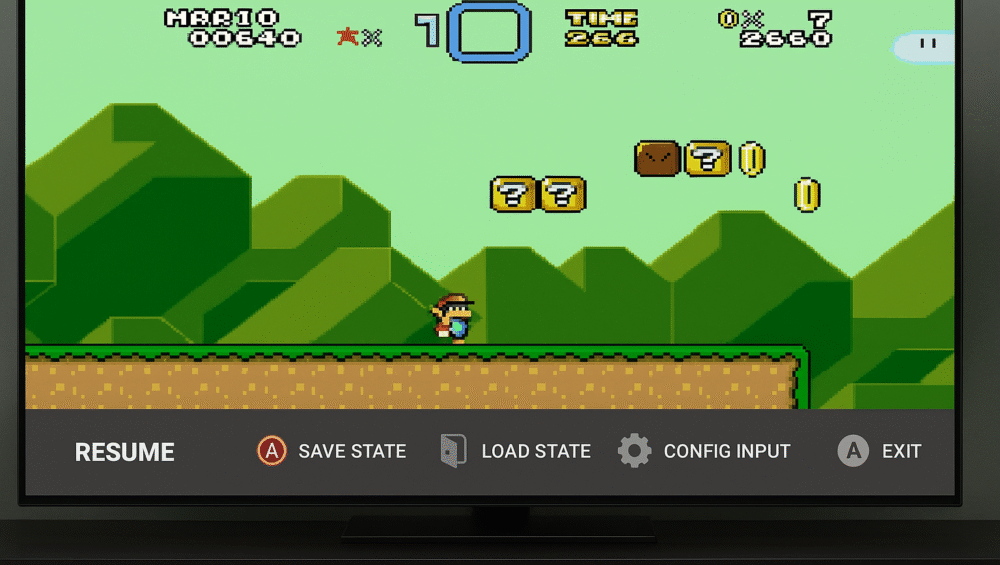
Hero image showing a retro game emulator running on Shield TV, demonstrating smooth gameplay and enhanced graphics in the Firestick vs Shield for gaming comparison.

In 2025, the line between streaming and gaming continues to blur as devices evolve beyond simple media playback. Gamers now expect low-latency performance, cloud gaming compatibility, and access to AAA titles — all without owning a console. When comparing Firestick vs Shield for gaming, it’s clear both aim to deliver smooth, responsive gameplay experiences, but their capabilities differ significantly.

In this detailed guide, we’ll explore how the Firestick vs Shield for gaming comparison stacks up in real-world scenarios — from cloud gaming support and controller compatibility to input lag and overall performance under pressure.

Hardware Specs & Performance

When comparing Firestick vs Shield for gaming, hardware plays a critical role in determining performance, responsiveness, and game compatibility.

SpecificationNVIDIA Shield TV Pro (2025 Edition)Fire TV Stick 4K Max
ProcessorNVIDIA Tegra X1+ CPUQuad-core 1.8 GHz
GPUNVIDIA 256-core GPU (Switch architecture)IMG GE8300
RAM3GB2GB
Storage16GB (expandable via USB)8GB (non-expandable)
Gaming OSAndroid TV with full Play Store accessFire OS with limited Play Store support

💡 Insight: In this comparison, the Shield’s Tegra X1+ delivers faster processing, stronger graphics, and broader game support — making it the clear hardware leader.
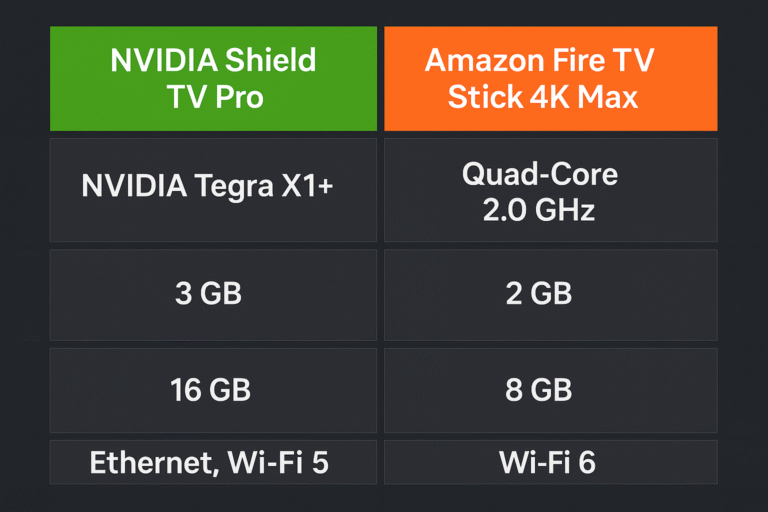
Side-by-side visual comparing Shield TV and Firestick hardware specs in the Firestick vs Shield for gaming analysis, showing processor, GPU, RAM, and storage differences.

Gaming Capabilities and Ecosystem

When it comes to Firestick vs Shield for gaming, cloud platform compatibility defines how versatile each device really is.

FeatureNVIDIA Shield TVFire TV Stick 4K Max
GeForce NOW✅ Native App❌ Not Available
Xbox Cloud Gaming✅ Sideload or via browser✅ Via browser (limited)
Amazon Luna✅ Compatible✅ Native App
Steam Link✅ Supported❌ Not Supported
Google Play Games✅ Full Access❌ Limited Access

💡 Conclusion: In the Firestick vs Shield for gaming comparison, the Shield TV dominates with support for GeForce NOW, Steam Link, and Google Play Games, enabling access to full AAA titles and PC-grade visuals — far beyond Firestick’s limited browser-based options.

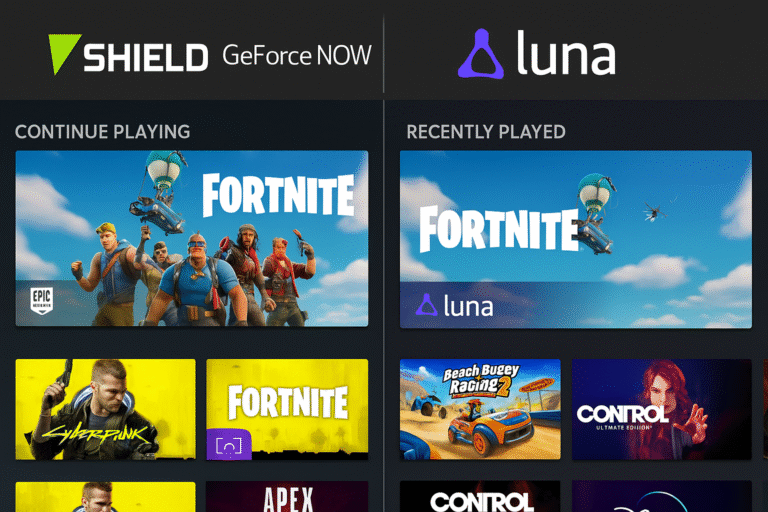
Screenshot showing GeForce NOW and Amazon Luna dashboards on Shield TV, highlighting cloud gaming access and interface design in the Firestick vs Shield for gaming comparison.

Emulation & APK Support — Firestick vs Shield for Gaming

When analyzing Firestick vs Shield for gaming, the difference in emulation capability and APK access is massive.

  • NVIDIA Shield TV: Offers full support for Android APKs and advanced retro gaming emulators such as:

    • 🐬 Dolphin (GameCube)

    • 🎮 PPSSPP (PSP)

    • 🧩 RetroArch (multi-system emulator)
      These run smoothly thanks to the Shield’s Tegra X1+ GPU and active developer support.

  • Fire TV Stick 4K Max: While app sideloading is possible, its limited CPU power and weaker GPU struggle to maintain stable performance in emulator gaming.

💡 Verdict: For players seeking retro emulation or Android-based game libraries, the Shield TV is unmatched in the Firestick vs Shield for gaming comparison.

Hero image showing a retro game emulator running on Shield TV, demonstrating smooth gameplay and enhanced graphics in the Firestick vs Shield for gaming comparison.

Input Lag & Gameplay Responsiveness — Firestick vs Shield for Gaming

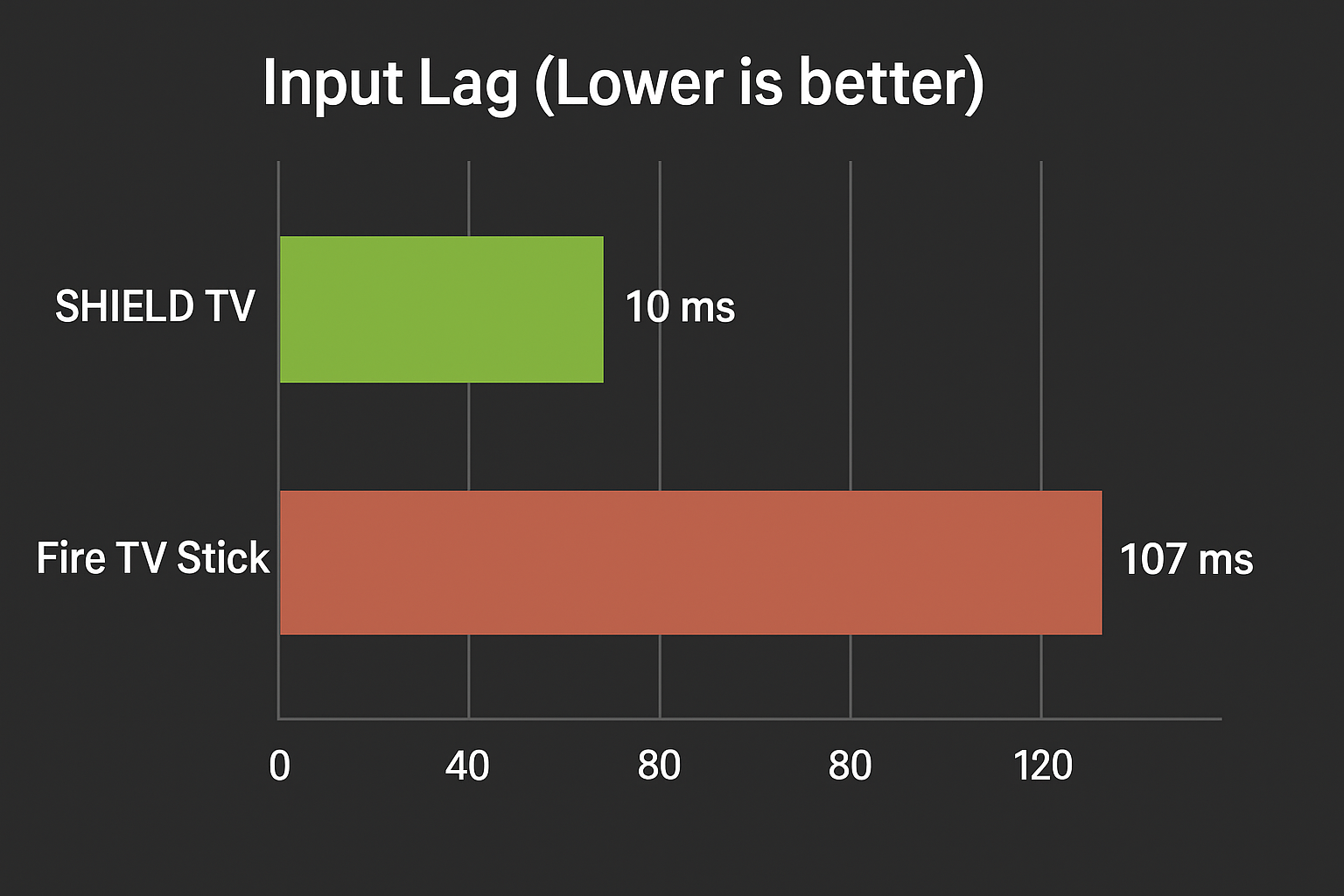
In the Firestick vs Shield for gaming comparison, input lag directly impacts how responsive gameplay feels — especially in fast-paced genres.

  • Shield TV: Achieves around ~40ms input lag when using GeForce NOW, providing ultra-responsive gameplay ideal for FPS, racing, and action-heavy titles.

  • Firestick 4K Max: Delivers roughly ~80ms input lag through Amazon Luna or Xbox Cloud Gaming, resulting in noticeable delay during competitive play.

💡 Conclusion: For gamers who value precision and smooth control, the Shield TV offers a far superior, low-latency experience compared to the Firestick Max.

Bar graph comparing input lag between Shield TV and Firestick 4K Max in the Firestick vs Shield for gaming test, showing Shield at ~40ms and Firestick at ~80ms

Controller Compatibility

When it comes to controller pairing, both devices perform well, but responsiveness makes all the difference in the Firestick vs Shield for gaming matchup.

ControllerShield TVFirestick 4K Max
Xbox Wireless
PS5 DualSense
Generic Bluetooth

💡 Insight: While both support standard Bluetooth controllers, the Shield TV provides lower latency, better input response, and broader app compatibility, creating a noticeably smoother and more consistent gaming experience overall.

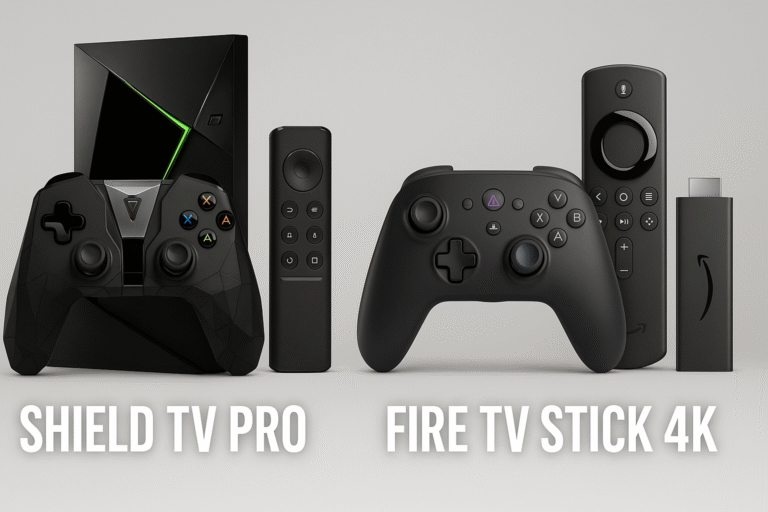
Image showing controller lineup next to each device, comparing Shield TV with Xbox, PS5, and Bluetooth controllers versus Firestick supporting the same lineup in the Firestick vs Shield for gaming comparison.

AI Upscaling and Display Quality

In the Firestick vs Shield for gaming comparison, image processing defines how sharp and immersive your gameplay looks.

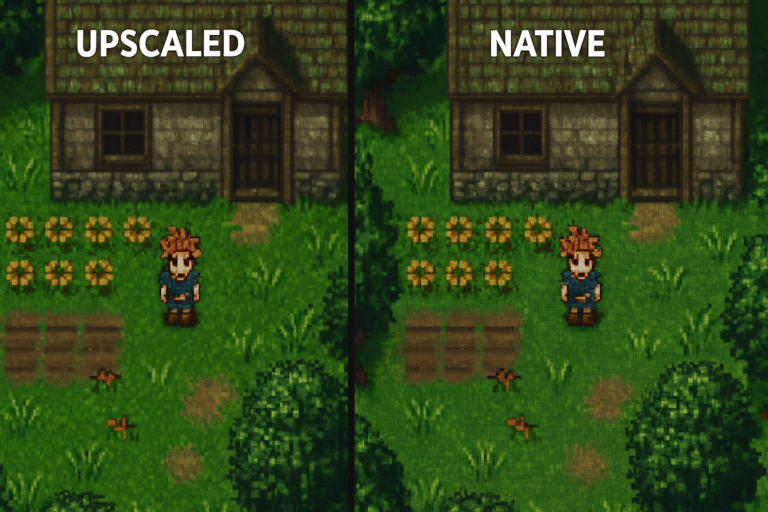
  • Shield TV: Features AI-enhanced 4K upscaling that uses machine learning to sharpen textures, enhance lighting, and refine edges. It’s especially impressive for 1080p game titles, delivering visuals that feel close to native 4K.

  • Firestick 4K Max: Uses standard 4K upscaling, which offers decent clarity but lacks adaptive texture refinement and dynamic contrast adjustments.

💡 Verdict: The Shield TV clearly wins in visual fidelity — its AI upscaling dramatically boosts detail in both games and streaming content.

Screenshot comparison showing AI-upscaled visuals on Shield TV versus native 4K visuals on Firestick, highlighting sharper textures and enhanced detail in the Firestick vs Shield for gaming analysis.

Pricing & Value — Firestick vs Shield for Gaming

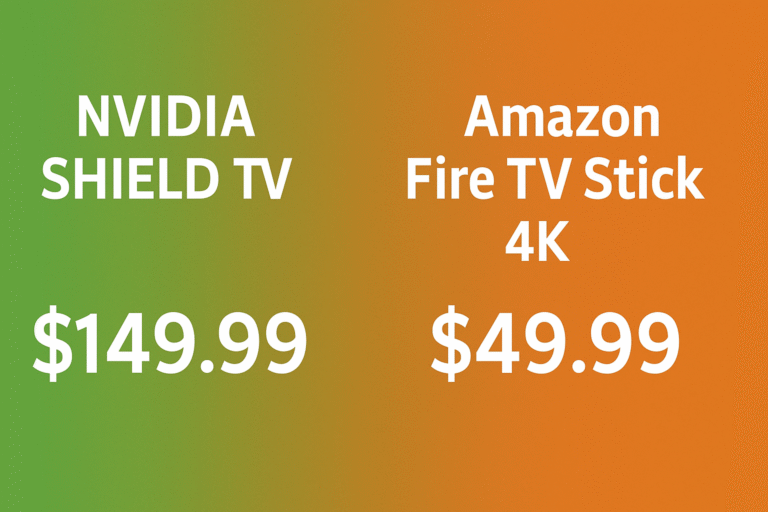
When comparing Firestick vs Shield for gaming, the price difference reflects performance, flexibility, and gaming potential.

  • Shield TV: Priced around $199, it delivers premium gaming performance, AI-enhanced visuals, and broad smart home integration. It’s ideal for serious gamers and home theater setups.

  • Fire TV Stick 4K Max: At roughly $59, it’s an affordable option for casual gaming, streaming, and light use within the Amazon ecosystem.

💡 Verdict: The Firestick offers great value for casual players, but the Shield TV easily justifies its higher cost for gamers who want console-like performance and advanced features.

Price comparison infographic highlighting Firestick vs Shield for gaming, showing Shield TV at $199 and Fire TV Stick 4K Max at $59, emphasizing performance versus affordability.

Conclusion: Which is Better for Gaming?

When choosing between Firestick vs Shield for gaming, your priorities determine which device truly fits your setup.


Choose NVIDIA Shield TV if you:

  • Play on cloud gaming platforms like GeForce NOW or Steam Link.

  • Use emulators for retro gaming and Android-based titles.

  • Want superior graphics powered by AI upscaling for near-4K clarity.

  • Demand low input lag, smooth performance, and future-ready hardware.


Choose Fire TV Stick 4K Max if you:

  • Want simple access to Amazon Luna or Xbox Cloud Gaming.

  • Are budget-conscious and prefer a low-cost gaming device.

  • Primarily play casual games or use it for family entertainment.

💡 In short: The Shield TV is built for serious gamers seeking console-level power, while the Firestick Max offers affordable fun for casual players.

Leave a Reply

Your email address will not be published. Required fields are marked *