
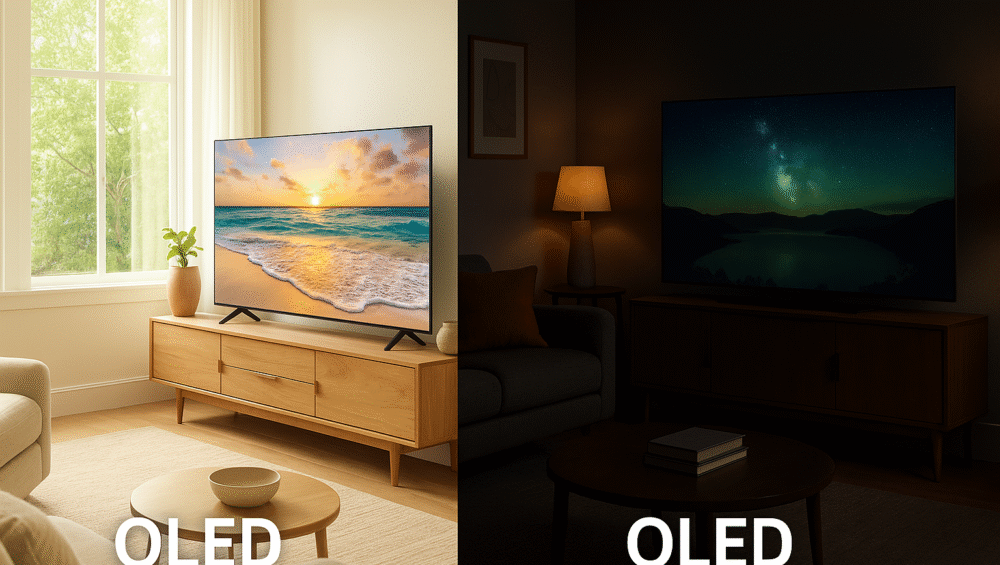
With 2025 bringing a surge of budget OLED or QLED TVs, shoppers now have more premium yet affordable options than ever before. While OLED technology excels in delivering deep blacks and perfect contrast, QLED stands out for its superior brightness and vibrant color reproduction. However, choosing between the two depends on how and where you watch.
In this guide, we’ll clearly outline the pros and cons of each display type, compare leading 2025 models, and help you decide which budget OLED or QLED TV best suits your needs—whether it’s for gaming, movies, or everyday viewing.
Display Technology Breakdown: Budget OLED or QLED TVs
QLED (Quantum Dot LED):
QLED technology uses a layer of quantum dots to enhance brightness and color accuracy. As a result, these TVs are significantly brighter than standard LEDs, making them ideal for well-lit rooms or daytime viewing.
OLED (Organic Light Emitting Diode):
OLED panels rely on self-lit pixels, which can completely turn off individually to produce true blacks and exceptional contrast. This makes budget OLED or QLED comparisons lean in OLED’s favor for dark-room viewing and cinematic depth.

Feature Comparison: Budget OLED or QLED TVs (2025 Models)
| Feature | QLED (e.g., TCL Q7) | OLED (e.g., LG A2 or A3 Series) |
|---|---|---|
| Price | $600–$900 | $900–$999 |
| Brightness | High | Moderate |
| Contrast | Good | Excellent |
| Viewing Angle | Average | Excellent |
| Burn-in Risk | None | Slight |
| Gaming Performance | Excellent (120Hz, VRR) | Good (60Hz, higher input lag) |
Summary:
When comparing budget OLED or QLED TVs, QLED options like the TCL Q7 excel in brightness and gaming performance, while OLED models such as LG’s A3 Series deliver unmatched contrast and cinematic visuals.

Best QLED Models Under $1,000
🔹 TCL Q7 QLED 65”
Offers a 120Hz refresh rate for smoother gaming and action scenes
Supports VRR and FreeSync Premium for tear-free motion
Runs Google TV OS, giving you a wide app ecosystem
Price: approximately $899, making it a solid pick in the budget OLED or QLED category
🔹 Hisense U6K QLED 55”
Uses a Mini-LED panel for enhanced contrast and better local dimming
Supports Dolby Vision + HDR10+ for vivid HDR performance
Price: around $649, making it one of the more affordable premium-quality budget OLED or QLED options
Best OLED Models Under $1,000
🔹 LG A3 OLED 48”
Offers perfect blacks thanks to self-lit pixels
Supports Dolby Vision and Filmmaker Mode for accurate visuals
Has slightly slower response times than higher-end LG models
Price: around $999, placing it in the competitive budget OLED or QLED range
🔹 Vizio OLED 55” (2024 Clearance Model)
Often available at great discount prices on clearance
Delivers excellent performance for movies, especially in dark scenes
Comes with a slight burn-in risk when displaying static UI content for long periods
Gaming: Budget OLED or QLED TVs Which Tech Wins?
Winner: QLED for Competitive Gamers
When comparing budget OLED or QLED TVs, QLED clearly takes the lead for fast-paced and competitive gaming. The TCL Q7 QLED stands out with its true 120Hz refresh rate and VRR (Variable Refresh Rate) support, delivering ultra-smooth performance with minimal input lag.
In contrast, OLED models like the LG A3 are limited to 60Hz, resulting in slightly higher latency during action-heavy titles. However, OLEDs still excel in cinematic or story-driven games, offering unmatched contrast and deep blacks.
In short, QLED TVs are the better choice for competitive players focused on responsiveness, while OLEDs remain ideal for immersive, visually rich gaming experiences.
Movies & Streaming: OLED Dominates
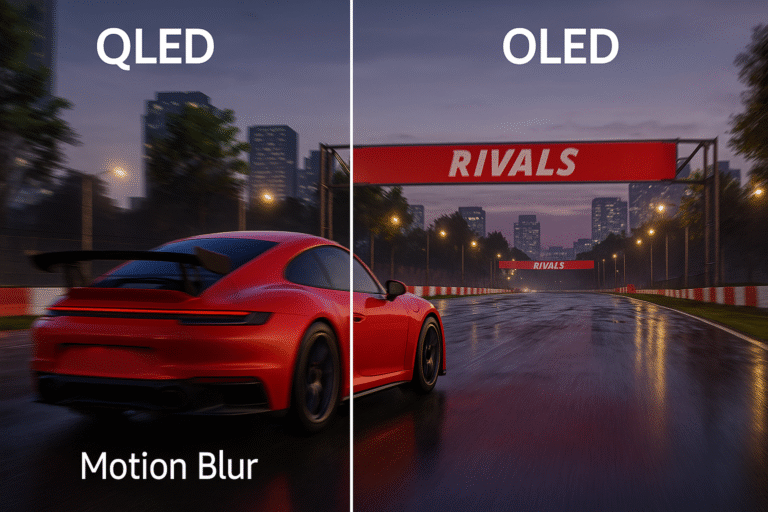
For home theaters and movie enthusiasts, OLED is the clear winner in the budget OLED or QLED debate. It delivers deeper blacks and richer shadow detail, creating a cinematic viewing experience that QLED panels can’t quite match.
When watching sci-fi, horror, or dark drama content, OLED’s self-lit pixels bring out subtle highlights and depth that make scenes feel more lifelike and immersive — perfect for late-night movie marathons or dimly lit rooms.

Bright Rooms: QLED is Better
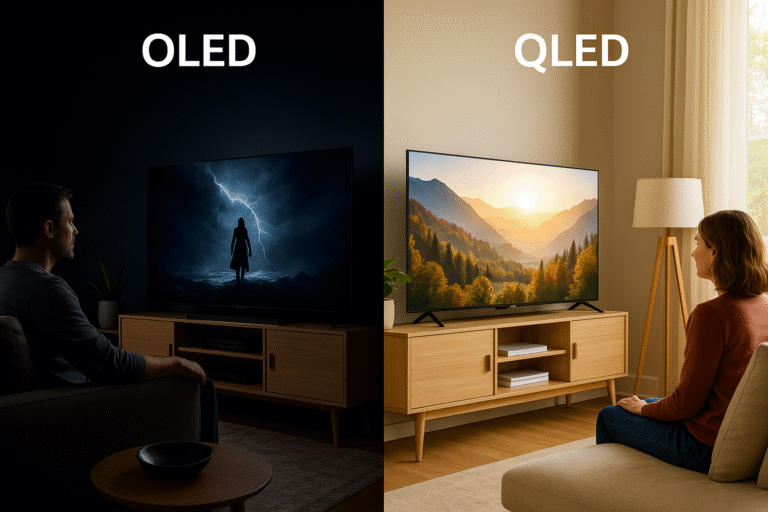
If your living room gets plenty of sunlight, QLED is the superior option in the budget OLED or QLED category. Its higher brightness levels and advanced anti-reflection coatings make it ideal for bright environments, ensuring vibrant visuals even during daytime viewing.
While OLED excels in dark rooms, QLED maintains color accuracy and visibility under natural light — making it the better pick for open living spaces or sunlit entertainment areas.

Verdict: Which One Should You Get?
Choose QLED if:
You play a lot of fast-paced or competitive games and need high refresh rates.
You watch TV in a bright room with lots of natural light.
You prefer a larger screen size at a lower cost, ideal for family rooms or shared spaces.
Choose OLED if:
You want the best cinematic experience with deep blacks and perfect contrast.
You’re fine with 60Hz gaming and prioritize visuals over speed.
You usually watch content at night or in darker environments, where OLED truly shines.
👉 In short, QLED fits dynamic, bright setups, while OLED suits dedicated home theater environments — the ultimate budget OLED or QLED decision depends on your viewing habits.
