

In the competitive world of streaming devices, the debate between Shield TV vs Firestick continues to dominate in 2025. Both the NVIDIA Shield TV Pro and Amazon Fire TV Stick 4K Max have earned strong reputations among smart home users and entertainment enthusiasts. However, while they share similar goals—delivering fast, high-quality streaming—their performance and ecosystem strengths differ in key ways.
In this in-depth comparison, we’ll explore how Shield TV vs Firestick stack up across performance, features, smart home compatibility, and overall value. By the end, you’ll know exactly which device fits your streaming, gaming, or smart home setup best in 2025.
Shield TV vs Firestick: Feature Comparison
| Feature | NVIDIA Shield TV Pro | Fire TV Stick 4K Max |
|---|---|---|
| Operating System | Android TV | Fire OS |
| 4K Support | Yes (with AI Upscaling) | Yes |
| HDR Formats | Dolby Vision, HDR10+ | Dolby Vision, HDR10+ |
| Voice Assistant | Google Assistant, Alexa | Alexa only |
| Smart Home Integration | Google, Alexa, HomeKit (via bridge) | Alexa |
| Expandable Storage | Yes (USB 3.0 ports) | No |
| Gaming Support | GeForce NOW, Android titles | Casual gaming only |
| Plex Media Server | Built-in server functionality | Client only (no server support) |
| Price (2025) | ~$199 | ~$49 |
When comparing Shield TV vs Firestick, it’s clear that the NVIDIA Shield TV Pro targets power users who want AI upscaling, gaming support, and server-level functionality, while the Fire TV Stick 4K Max focuses on affordable streaming and Alexa convenience.
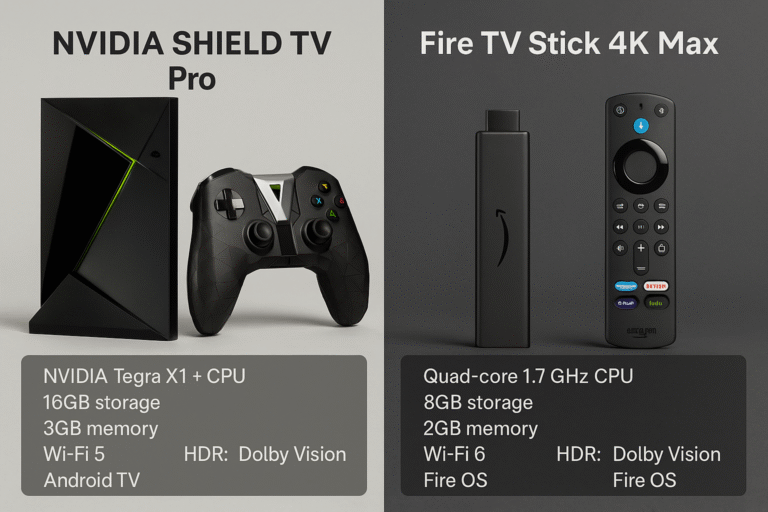
Design and Build – Shield TV vs Firestick
When comparing Shield TV vs Firestick, the design difference is immediately noticeable.
The NVIDIA Shield TV Pro features a sleek, black, flat-box design with a premium matte finish and ample connectivity options. It includes USB 3.0 ports, Ethernet, and expandable storage, making it ideal for users who value flexibility and performance in their setup.
In contrast, the Fire TV Stick 4K Max is a compact HDMI dongle—lightweight, discreet, and ultra-portable. It plugs directly into your TV’s HDMI port, eliminating cable clutter and fitting seamlessly behind the screen.
Verdict:
If you prioritize portability and minimalism, the Firestick is the clear winner. However, if you prefer expandability, Ethernet stability, and premium build quality, the Shield TV Pro takes the lead.
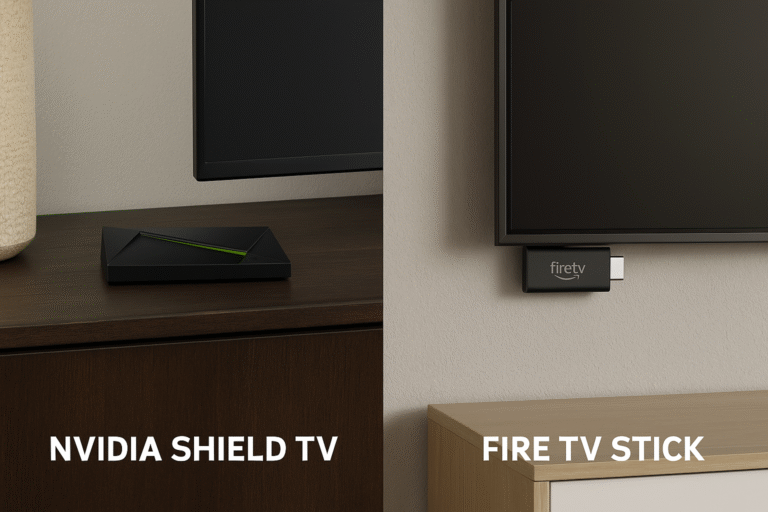
Performance and Processing Power – Shield TV vs Firestick
When it comes to performance, the Shield TV vs Firestick comparison highlights a clear gap in power and multitasking capabilities.
The NVIDIA Shield TV Pro is equipped with the Tegra X1+ processor and 3GB of RAM, delivering rapid app switching, fluid multitasking, and smooth gameplay. It’s optimized for demanding users who stream 4K HDR, run multiple apps, or use emulators and cloud gaming services like GeForce NOW.
Meanwhile, the Fire TV Stick 4K Max runs on a quad-core processor paired with 2GB of RAM. It performs well for everyday streaming tasks and app use but isn’t in the same performance class as NVIDIA’s hardware.
Verdict:
For users who multitask, game, or demand desktop-level responsiveness, the Shield TV Pro delivers superior speed and stability. However, for casual streaming and voice-controlled entertainment, the Firestick remains a strong, affordable option.
Video and Audio Quality – Shield TV vs Firestick
In terms of picture and sound performance, the Shield TV vs Firestick matchup is closer than you might expect—at least on paper.
Both the NVIDIA Shield TV Pro and Fire TV Stick 4K Max support 4K Ultra HD resolution, Dolby Vision, and HDR10+, ensuring sharp, high-contrast visuals across compatible TVs. They also deliver Dolby Atmos for immersive surround sound and offer access to all major streaming apps, including Netflix, Prime Video, Disney+, and HBO Max.
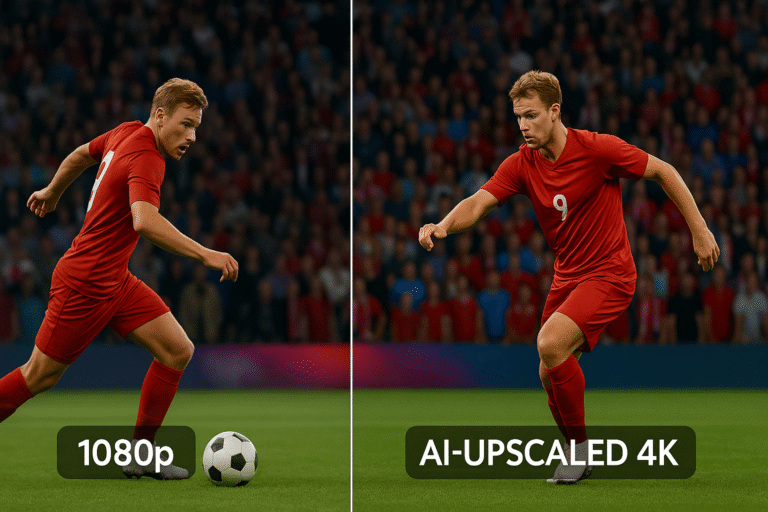
However, where the Shield TV truly stands apart is in its AI upscaling technology. Powered by NVIDIA’s deep learning algorithms, it can intelligently enhance HD and 1080p content, making it appear closer to true 4K quality with improved sharpness, detail, and texture.
Verdict:
If you’re focused on streaming quality and visual enhancement, the Shield TV Pro easily takes the lead. Its AI upscaling feature offers a cinematic boost that the Firestick simply can’t match.
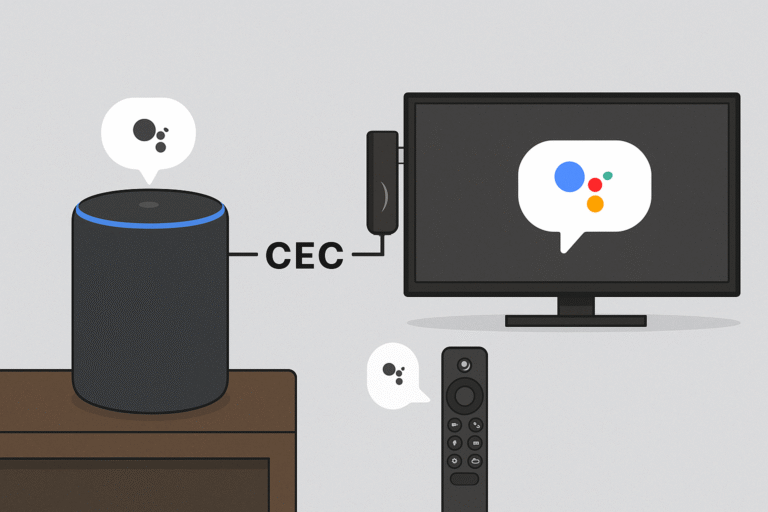
Smart Home Integration
When it comes to smart home compatibility, the Shield TV vs Firestick comparison reveals how each device aligns with different ecosystems.
The Fire TV Stick 4K Max integrates seamlessly with Alexa, Echo speakers, and Fire TV routines, creating a fully connected Amazon ecosystem. You can control playback, dim smart lights, or start streaming with a simple command like “Alexa, play The Boys.” It’s designed for users already invested in Alexa-based smart homes.
Meanwhile, the NVIDIA Shield TV Pro supports both Alexa and Google Assistant natively, offering far greater flexibility. It can also integrate with Apple HomeKit through Homebridge, making it a versatile option for mixed smart home setups.
Verdict:
If your home revolves around Alexa, the Firestick is the natural fit. But if you use Google Assistant, Apple HomeKit, or want broader cross-platform compatibility, the Shield TV Pro stands out as the more flexible and future-ready choice.
Plex and Media Center Use
In the Shield TV vs Firestick comparison, one of the biggest functional differences lies in Plex support and local media management.
The NVIDIA Shield TV Pro is the only mainstream streaming device with a built-in Plex Media Server. This means it can both host and stream your media library, eliminating the need for a separate PC or NAS. With hardware acceleration from its Tegra X1+ processor, it handles 4K transcoding and high-bitrate playback effortlessly.
In contrast, the Fire TV Stick 4K Max can only act as a Plex client, meaning it can stream content from a server but cannot host one. You’ll need a separate Plex server running on another device, such as a computer or NAS, for it to function properly.
Verdict:
For media collectors or users running a home streaming setup, this distinction alone can justify the Shield TV Pro’s higher price. It delivers the most complete Plex experience, combining server-level power with client-level convenience—something the Firestick simply can’t match.
Gaming Capabilities – Shield TV vs Firestick
When comparing Shield TV vs Firestick for gaming, the difference in capability is substantial.
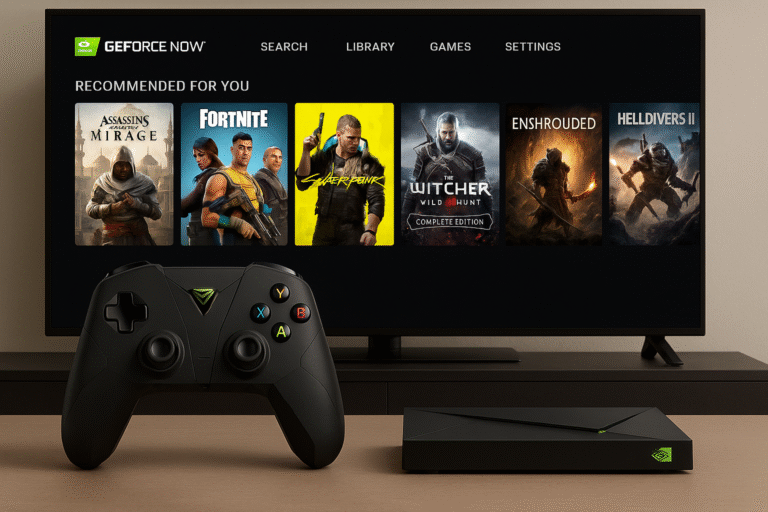
The NVIDIA Shield TV Pro supports GeForce NOW cloud gaming, Android games, and even retro game emulation, making it one of the most versatile entertainment devices on the market. Its Tegra X1+ processor and 3GB of RAM allow smooth, console-like gameplay with support for Bluetooth controllers, USB peripherals, and 4K streaming for cloud-based titles.
On the other hand, the Fire TV Stick 4K Max is limited to basic mobile-style games from the Amazon Appstore. It does not support advanced controller-based gaming or high-performance emulation, making it suitable only for casual play.
Verdict:
For gamers or anyone who values performance and versatility, the Shield TV Pro is the clear winner. It transforms your TV into a powerful gaming hub, while the Firestick remains focused solely on casual entertainment.
Final Verdict: Which Is Best for You?
The Shield TV vs Firestick debate ultimately comes down to performance, versatility, and ecosystem preference. Both devices serve different audiences extremely well.
Choose the NVIDIA Shield TV Pro if you want:
Top-tier performance with AI upscaling for sharper HD-to-4K visuals.
Built-in Plex Media Server capability, ideal for managing personal libraries.
Broad smart home compatibility across Google Assistant, Alexa, and Apple HomeKit (via Homebridge).
Access to GeForce NOW, Android games, and advanced app support for productivity and entertainment.
Choose the Fire TV Stick 4K Max if you want:
A budget-friendly streaming device with seamless Alexa integration.
A compact, portable solution for basic 4K HDR viewing.
Reliable Amazon ecosystem support, including Fire TV routines and Echo speaker pairing.
Bottom Line:
If you value power, gaming, and long-term flexibility, the Shield TV Pro is the best all-in-one option. But if you want affordable, easy streaming with tight Alexa integration, the Fire TV Stick 4K Max remains the smarter budget choice.
