
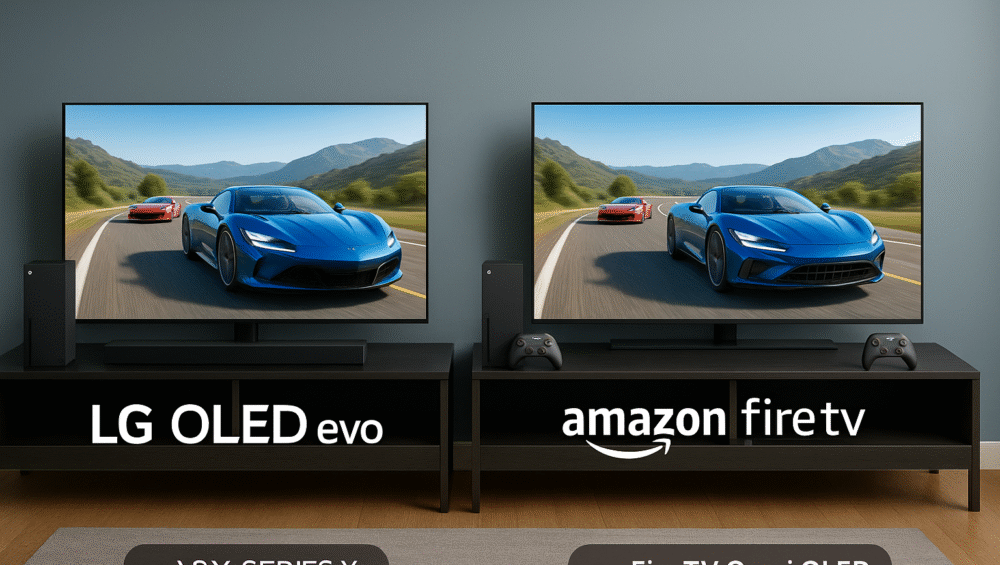
As the gaming world continues to demand ultra-fast refresh rates, low input lag, and immersive HDR visuals, the debate around OLED vs QLED for gaming has become more relevant than ever. Choosing the right display can make all the difference between a smooth victory and a frustrating delay. In this deep-dive, we compare the Fire TV Omni QLED (65” and 75”) against the LG C3 OLED (65”) — two of the most talked-about smart TVs for gamers in 2025.
Whether you’re gaming on a PlayStation 5, Xbox Series X, or streaming through NVIDIA GeForce NOW or Amazon Luna, this comparison explores performance, visual quality, and real-world usability, helping you decide which display truly levels up your gaming experience.
OLED vs QLED for Gaming: Display Technology Breakdown
Fire TV Omni QLED (65” / 75”)
Panel Type: QLED (Quantum Dot LED) — delivers vibrant colors and excellent brightness.
Brightness: High peak brightness, making it ideal for well-lit rooms or daytime gaming.
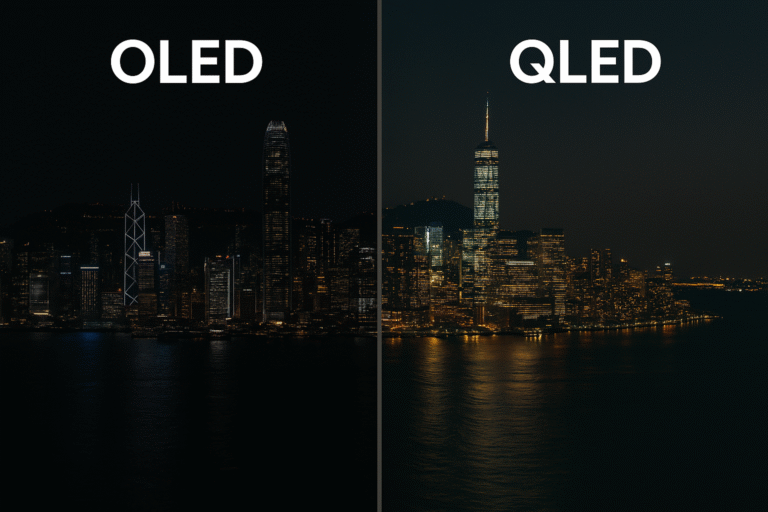
Contrast: Uses local dimming zones rather than individually lit pixels, providing strong but not perfect black levels.
Burn-in Risk: None, making it safe for static HUDs or long gaming sessions.
LG C3 OLED (65”)
Panel Type: OLED evo, offering superior contrast and true-to-life visuals.
Brightness: Lower peak brightness than QLED but notably improved from the previous C2 model.
Contrast: Pixel-level lighting delivers perfect blacks and stunning depth in dark scenes.
Burn-in Risk: Very low, thanks to enhanced anti-retention technology for long-term gaming use.
✅ Verdict: In the OLED vs QLED for gaming debate, the Fire TV Omni QLED shines in bright environments and long sessions, while the LG C3 OLED dominates in cinematic contrast and immersive night-time gaming.
OLED vs QLED for Gaming: Performance Comparison
| Feature | Fire TV Omni QLED (75”) | LG C3 OLED (65”) |
|---|---|---|
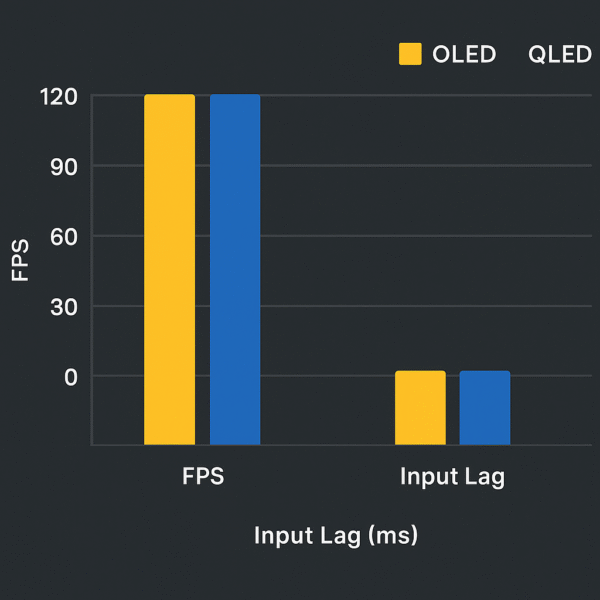
| Refresh Rate | 60Hz native, supports 120Hz with motion interpolation | 120Hz native OLED panel for ultra-smooth gameplay |
| HDMI 2.1 Ports | 1 HDMI 2.1 port (exclusive to 75” model) | 4 HDMI 2.1 ports, ideal for multiple next-gen consoles |
| VRR (Variable Refresh Rate) | ❌ Not supported | ✅ Full VRR support for tear-free visuals |
| ALLM (Auto Game Mode) | ✅ Enabled | ✅ Enabled |
| Input Lag (Game Mode) | ~11ms | ~5ms — near-instant response for competitive gaming |
| Cloud Gaming Support | Amazon Luna, Xbox Cloud Gaming | NVIDIA GeForce NOW, Xbox Cloud Gaming |
✅ Verdict: When it comes to OLED vs QLED for gaming, the Fire TV Omni QLED offers great casual performance with built-in Alexa and cloud gaming access, while the LG C3 OLED takes the lead for hardcore gamers, offering true 120Hz refresh, VRR, and ultra-low input lag.
OLED vs QLED for Gaming: Game Mode Experience
Fire TV Omni QLED
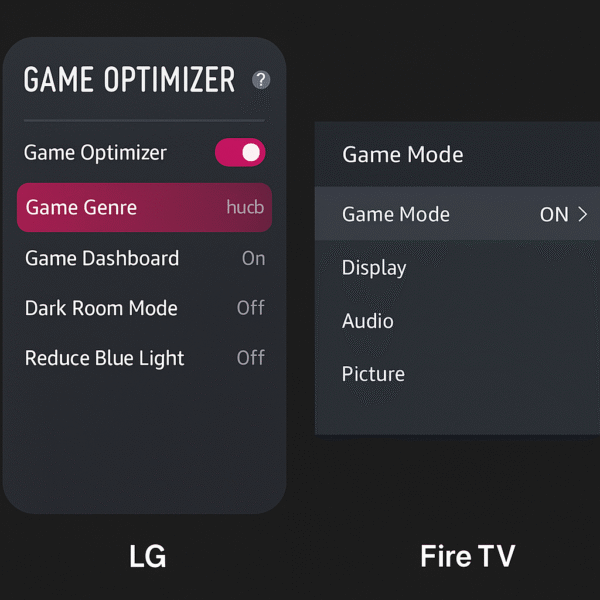
Game Mode activates automatically through ALLM (Auto Low Latency Mode) when a console is detected.
Offers slight input lag reduction, making it suitable for casual or cloud gamers.
However, it provides limited picture adjustments and lacks VRR or a dedicated Game Dashboard for fine-tuning visuals.
LG C3 OLED
Features an advanced Game Optimizer UI with presets for FPS, RPG, and RTS modes.
Includes custom tone mapping and black stabilizer controls for enhanced shadow detail.
Delivers true 4K at 120Hz with Dolby Vision Gaming, giving it a clear edge in OLED vs QLED for gaming performance.
✅ Verdict: While the Fire TV Omni QLED is convenient and Alexa-friendly, the LG C3 OLED caters to serious gamers who demand precision, responsiveness, and cinematic HDR immersion.
Console Performance Breakdown
For PlayStation 5:
LG C3 OLED is the clear winner, offering native 120Hz refresh rate, VRR (Variable Refresh Rate), and ALLM for ultra-smooth responsiveness.
Fire TV Omni QLED, while competent, caps at 60Hz and delivers only a minor input lag reduction in Game Mode.
For Xbox Series X:
LG C3 takes the lead again with Dolby Vision Gaming at 4K 120Hz, producing vivid HDR and seamless motion.
Fire TV Omni QLED supports basic HDR10 and Auto Game Mode, but lacks advanced tone mapping and refresh flexibility.
For Cloud Gamers:
Fire TV Omni QLED shines with built-in Luna integration, particularly on the 75-inch model, ideal for casual gamers.
LG C3 OLED supports a wider range of platforms, including GeForce NOW and Xbox Game Pass, making it the better long-term option for cloud enthusiasts.
✅ Verdict: When it comes to OLED vs QLED for gaming, the LG C3 dominates in raw performance, but the Fire TV Omni QLED offers a simpler, Alexa-friendly option for casual and cloud-based play.
Price Comparison – OLED vs QLED for Gaming
| Model | Display | Price (Approx.) | Key Value Point |
|---|---|---|---|
| Fire TV Omni QLED 65″ | QLED | ~$699 | Affordable entry into Alexa-integrated 4K gaming |
| Fire TV Omni QLED 75″ | QLED | ~$999 | Larger screen with built-in Luna cloud gaming |
| LG C3 OLED 65″ | OLED | ~$1,599 | Premium 120Hz performance with Dolby Vision Gaming |
✅ Quick Take:
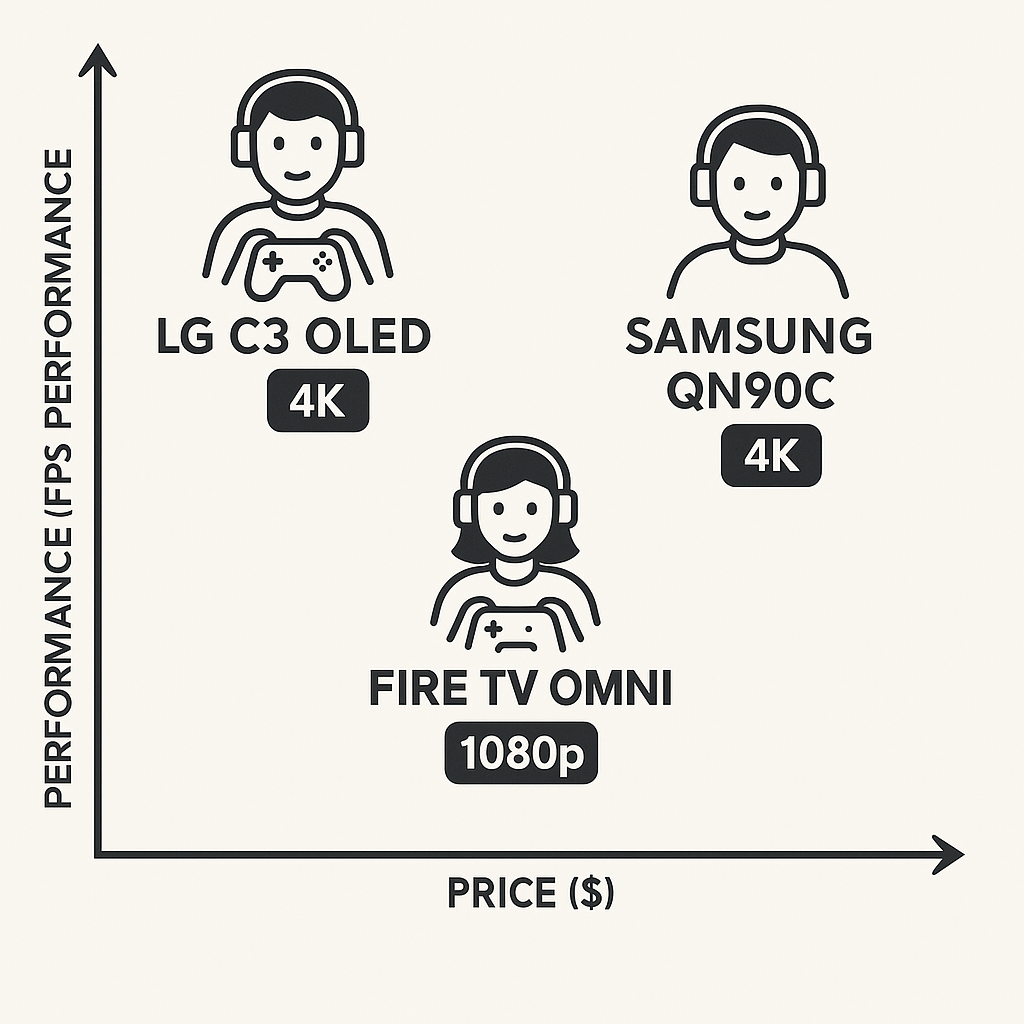
If you’re on a budget or want Alexa-driven convenience, go for the Fire TV Omni QLED. But for gamers chasing cinematic HDR, lightning-fast input response, and true 120Hz gameplay, the LG C3 OLED is worth every extra dollar.
Verdict: Which TV Is Better for Console Gamers?
| Type of Gamer | Best TV Option | Why It Fits |
|---|---|---|
| Competitive FPS players | LG C3 OLED | 120Hz native refresh, VRR, ultra-low input lag (~5ms) |
| Casual console gamers | Fire TV Omni QLED 75” | Big screen, smooth 60Hz ALLM mode, Alexa voice control |
| Budget-focused buyers | Fire TV Omni QLED 65” | Great price-to-performance ratio with HDR10+ |
| Cloud streaming gamers | LG C3 OLED | Supports GeForce NOW and Xbox Cloud with minimal latency |
| HDR movie + game combo | LG C3 OLED | Dolby Vision Gaming and perfect OLED contrast for cinema-quality visuals |
✅ Quick Insight:
If you prioritize competitive precision and visual depth, the LG C3 OLED dominates. But for budget-conscious gamers or those seeking Alexa-powered simplicity, the Fire TV Omni QLED remains a smart and capable choice.
Final Thoughts
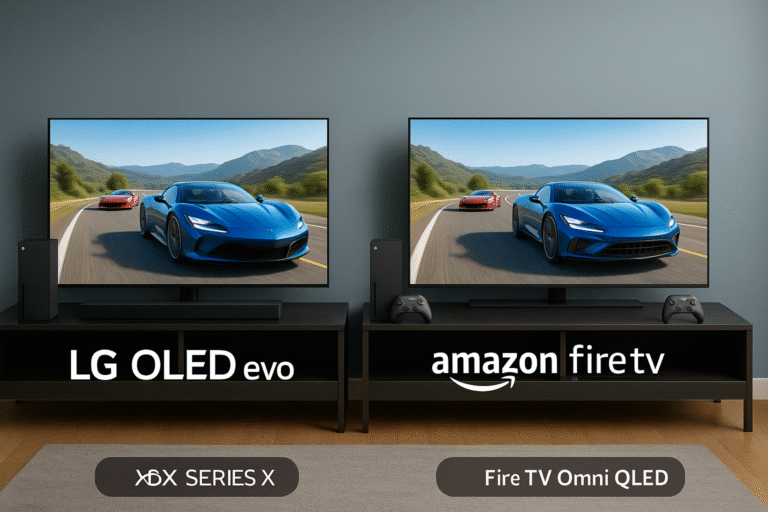
While the Fire TV Omni QLED 75” delivers excellent value thanks to its built-in Alexa integration, solid HDR10+ performance, and Amazon Luna cloud gaming support, it’s best suited for casual or budget-conscious players. However, its 60Hz panel and lack of Variable Refresh Rate (VRR) make it less ideal for competitive console gamers who demand faster response times and smoother motion.
In contrast, the LG C3 OLED stands out as a true gaming powerhouse in 2025. With a 120Hz native refresh rate, ultra-low input lag (~5ms), Dolby Vision Gaming, and four HDMI 2.1 ports, it offers unmatched precision, responsiveness, and visual fidelity. For serious console or cloud gamers, the LG C3 OLED remains the top-tier choice for immersive, next-gen performance.