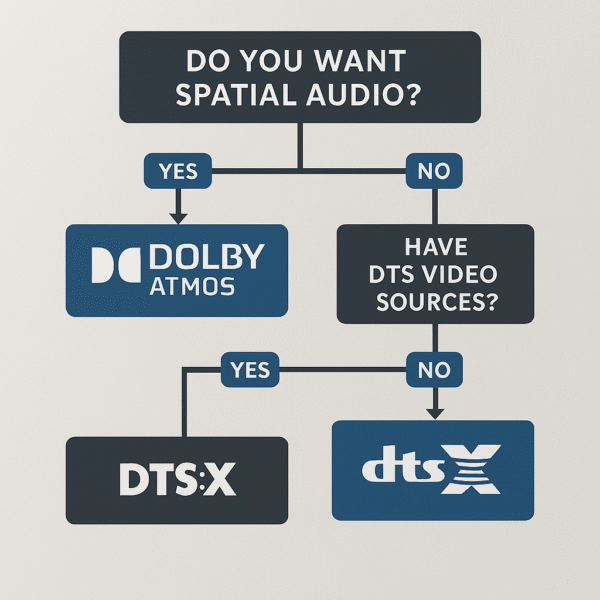
When building a premium home theater setup in 2025, one of the most important decisions you’ll make is selecting the right surround sound format. The ongoing battle of Dolby Atmos vs DTS:X continues to redefine how we experience movies, gaming, and high-fidelity music. Both are advanced object-based audio technologies, yet each offers distinct advantages depending on your room layout, soundbar configuration, or AV receiver.
In this guide, we’ll explore the technical differences between Dolby Atmos and DTS:X, compare supported devices, and discuss their unique sound characteristics. Moreover, we’ll help you determine which format best aligns with your lifestyle and listening preferences, ensuring you achieve the most immersive and personalized home theater experience possible.
How Object-Based Audio Powers Dolby Atmos vs DTS:X
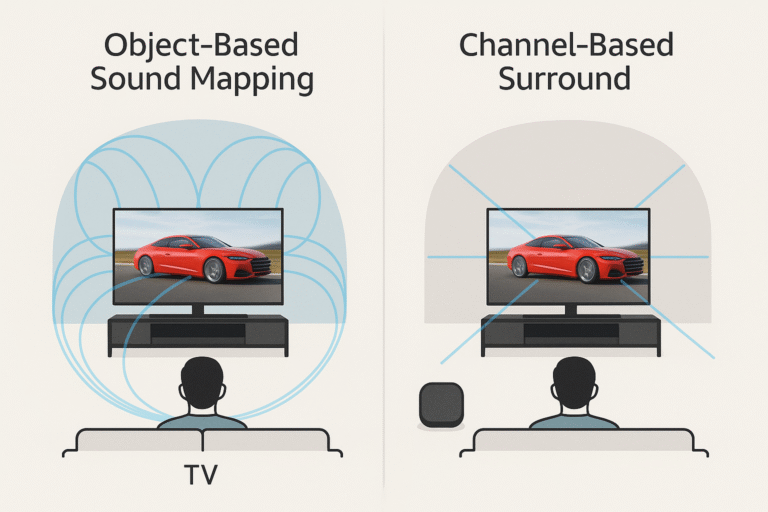
Unlike traditional surround formats that assign sounds to fixed channels, object-based audio gives sound designers the freedom to position audio elements anywhere in a three-dimensional space. As a result, instead of simply hearing a plane move from left to right, you can experience it soaring overhead, circling behind you, and fading naturally into the distance.
Both Dolby Atmos and DTS:X use this advanced object-based approach to create immersive, lifelike soundscapes. Moreover, by removing the limitations of channel-based mixing, these formats deliver greater precision, depth, and realism—elevating the listening experience far beyond older technologies like Dolby Digital or DTS-HD. This flexibility is what makes the Dolby Atmos vs DTS:X comparison so fascinating for anyone pursuing truly cinematic sound at home.
Key Differences Between Dolby Atmos and DTS:X
When comparing Dolby Atmos vs DTS:X, it’s clear that both formats share the same object-based foundation but differ in flexibility, compatibility, and ecosystem support. Understanding these distinctions helps you choose the one that best complements your home theater setup.
| Feature | Dolby Atmos | DTS:X |
|---|---|---|
| Audio Type | Object-based | Object-based |
| Height Channel Support | Yes (required for full experience) | Yes (optional) |
| Speaker Flexibility | Fixed layout (recommended) | Flexible layout |
| Streaming Compatibility | Widespread (Netflix, Disney+, Apple TV+) | Less common on streaming platforms |
| Device Compatibility | Broad soundbar and AV receiver support | Mostly AV receivers and higher-end systems |
In short, Dolby Atmos leads in accessibility and streaming integration, while DTS:X offers greater flexibility for custom speaker configurations. Therefore, the Dolby Atmos vs DTS:X debate often comes down to whether you value ease of use and availability or customization and control.
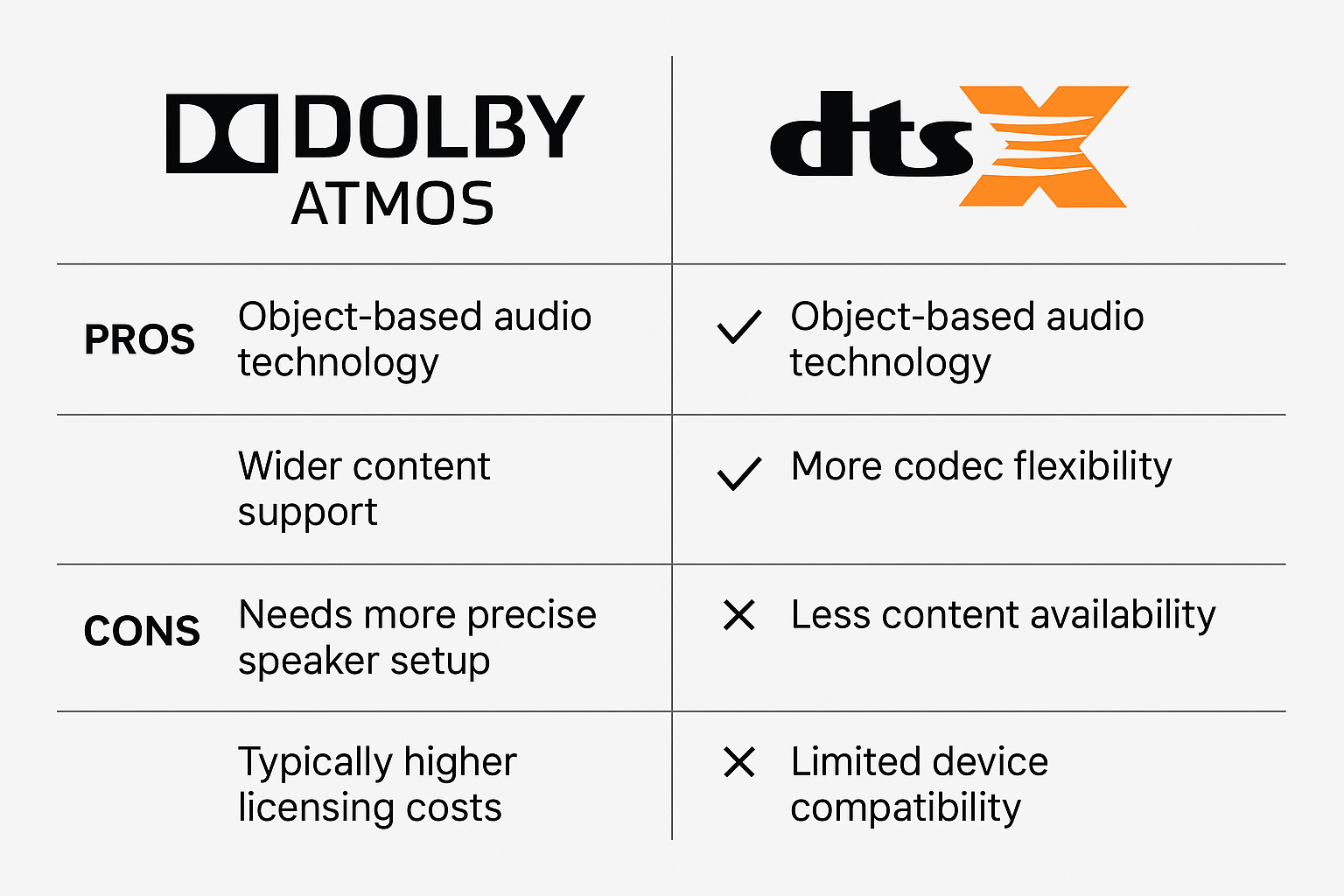
When comparing Dolby Atmos vs DTS:X, one of the biggest differences lies in where and how each format is used. Dolby Atmos is far more prevalent across streaming platforms like Netflix, Disney+, and Apple TV+, and it’s widely supported by most modern soundbars and TVs.
DTS:X, however, shines in custom home theater setups and AV receiver-based systems, offering greater speaker placement flexibility and calibration options.
In essence, Dolby Atmos dominates for mainstream accessibility and convenience, while DTS:X caters to enthusiasts who want precise, customizable audio performance in a tailored environment. As a result, the Dolby Atmos vs DTS:X choice often depends on whether you prioritize ease of integration or total control over your soundstage.
Supported Devices: Dolby Atmos vs DTS:X
When it comes to device compatibility, the Dolby Atmos vs DTS:X divide becomes clear. Each format thrives in different hardware categories—Dolby Atmos leading the way with soundbars and streaming devices, while DTS:X dominates traditional AV receiver setups.
Dolby Atmos Soundbars
Sonos Arc
Samsung HW-Q700C and HW-Q990C
Bose Smart Soundbar 900
Vizio Elevate
DTS:X Compatible Systems
Denon AVR-X3800H
Yamaha RX-V6A
LG SN11RG Soundbar
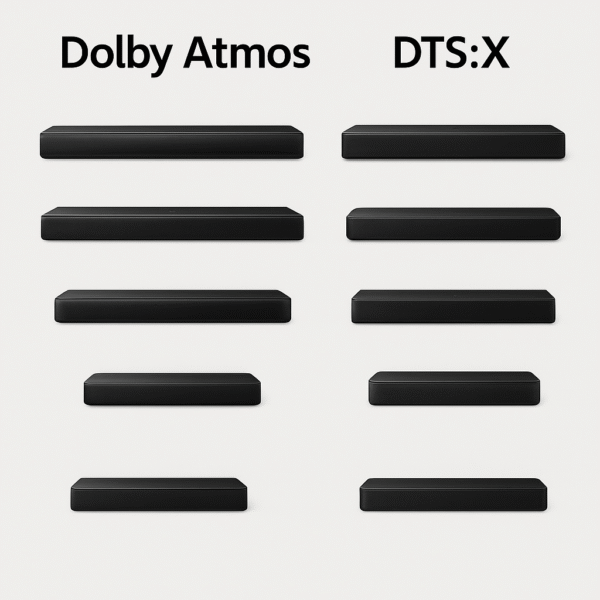
If you plan to use a soundbar, Dolby Atmos is the clear choice. Not only is it more widely supported, but many newer models also include virtual Atmos processing—a technology that uses directional tweeters to simulate ceiling speakers and create a spacious, 3D soundstage. As a result, for most modern setups, Dolby Atmos vs DTS:X comes down to convenience versus customization, with Atmos offering plug-and-play immersion that fits effortlessly into any living space.
Gaming Performance: Dolby Atmos vs DTS:X
When it comes to gaming, both Dolby Atmos and DTS:X enhance immersion through spatial audio, but their platform support and integration differ significantly.
Dolby Atmos
Supported on Xbox Series X, select Windows 11 PCs, and many compatible game titles including Call of Duty, Forza Horizon, and Gears 5.
Delivers immersive vertical sound effects, allowing players to hear enemies or objects moving above and around them.
DTS:X
Available via DTS Headphone:X for PC gaming, providing positional accuracy through standard stereo or surround headphones.
Supported primarily by select AV receivers, offering limited console compatibility.
Winner for gaming: Dolby Atmos.
Thanks to its broader console support, enhanced 3D sound positioning, and native integration with popular titles, Dolby Atmos provides a more consistent and realistic gaming experience. As a result, in the Dolby Atmos vs DTS:X comparison, Atmos takes the edge for gamers seeking both accessibility and immersion.
Streaming and Movie Playback: Dolby Atmos vs DTS:X
When comparing Dolby Atmos vs DTS:X for streaming and cinematic experiences, the difference often comes down to content availability and audio design philosophy.
Dolby Atmos
Consistently supported on major streaming platforms like Netflix, Disney+, HBO Max, and Apple TV+.
Incorporates height channels to create dynamic overhead effects.
Excels in action scenes, environmental effects, and large-scale soundscapes, making movies feel expansive and immersive.
DTS:X
Often preferred for Blu-ray discs and physical media, where higher bitrates ensure lossless quality.
Delivers exceptional dialogue clarity and natural sound reproduction, ideal for balanced listening.
Less reliant on ceiling speakers, allowing greater flexibility in room setup and speaker placement.
In short, Dolby Atmos is the go-to choice for streaming and soundbar setups, while DTS:X shines in dedicated home theater systems built around physical media and precision audio. Therefore, the Dolby Atmos vs DTS:X decision ultimately depends on how—and where—you enjoy your entertainment.
Which Is Better for Small Rooms and Apartments?
The Dolby Atmos vs DTS:X debate also extends to room size and layout, as each format performs differently depending on your environment.
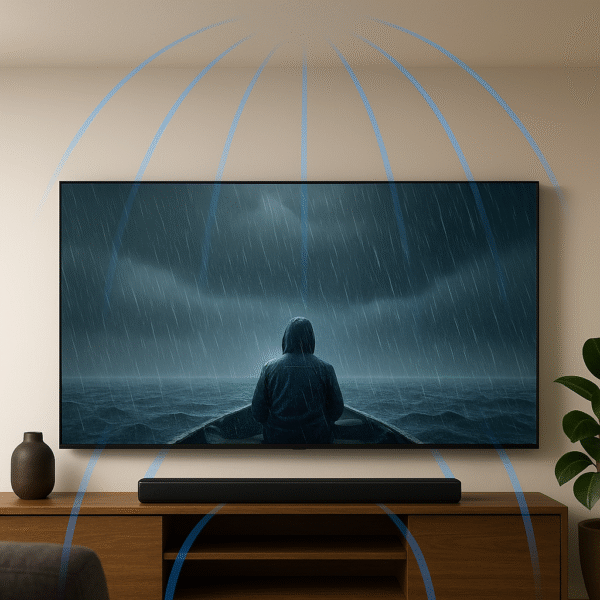
Dolby Atmos works surprisingly well in small rooms, especially when paired with virtualized or upward-firing soundbars such as the Sonos Beam Gen 2 or Samsung HW-Q600C. These systems use ceiling reflections and DSP processing to create convincing 3D height effects, even in compact spaces. As a result, Atmos is an excellent choice for apartments, bedrooms, or condos where space is limited but immersion still matters.
DTS:X, however, truly excels in custom installations and rooms with unconventional layouts. Thanks to its speaker mapping flexibility, DTS:X can adapt to asymmetrical environments, odd ceiling heights, or varied seating arrangements more easily than Atmos can.
Best pick for apartments: Dolby Atmos soundbars with upward-firing drivers—they deliver immersive sound without requiring complex speaker setups or room modifications.
Which Should You Choose?
Your decision between Dolby Atmos vs DTS:X ultimately depends on your entertainment habits, preferred devices, and room configuration. Both deliver incredible immersion—but each shines in different scenarios.
Choose Dolby Atmos if you:
Stream movies and shows on platforms like Netflix, Disney+, or Apple TV+.
Want broad compatibility with soundbars, TVs, and compact systems.
Prefer immersive gaming experiences on Xbox Series X or PC with vertical sound effects.
Choose DTS:X if you:
Primarily watch physical media such as Blu-ray discs for the best lossless audio quality.
Own a high-end AV receiver and dedicated speaker setup.
Need flexible speaker layout options for custom or asymmetrical room designs.
In conclusion, Dolby Atmos is ideal for modern streaming and gaming setups, while DTS:X caters to audiophiles and home theater purists. Therefore, your best choice in the Dolby Atmos vs DTS:X debate depends on whether you value plug-and-play simplicity or high-end customization.