
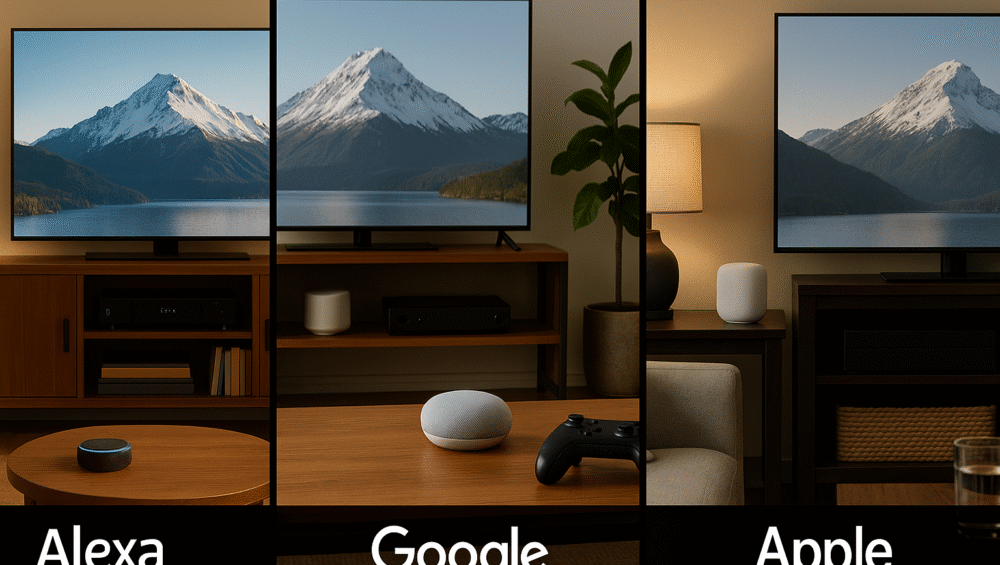
The AV receiver smart home integration landscape has evolved far beyond simple voice commands for lights. Today, modern receivers can orchestrate entire home theater systems with your voice, creating a seamless bridge between entertainment and automation. Leading platforms like Amazon Alexa, Google Assistant, and Apple Siri/HomeKit make it possible to control inputs, scenes, and audio zones with natural commands.
In this guide, we’ll compare the smart home integration capabilities of top AV receiver brands — Yamaha, Denon, Marantz, Onkyo, and Pioneer — across the three leading ecosystems. Whether you’re building an Alexa-powered home theater or connecting Apple HomeKit to your AV setup, this breakdown shows what to expect in 2025.
Key Benefits of AV Receiver Smart Home Integration
The AV receiver smart home integration features available in 2025 go well beyond simple audio control. With modern platforms, your receiver can become a central piece of your smart living room.
Hands-Free Operation – Adjust volume, switch inputs, and power devices on or off using only your voice.
Multi-Platform Compatibility – Connect seamlessly with lighting, thermostats, TVs, and more across Alexa, Google, or Siri ecosystems.
Custom Scene Creation – Build routines through Alexa Routines, Google Actions, or Siri Shortcuts to automate your entertainment and environment together.
Ecosystem Flexibility – Choose the voice assistant that best aligns with your existing smart home setup for smoother integration.
✅ With these features, AV receiver smart home integration transforms your home theater into a responsive, voice-driven hub for both entertainment and automation.
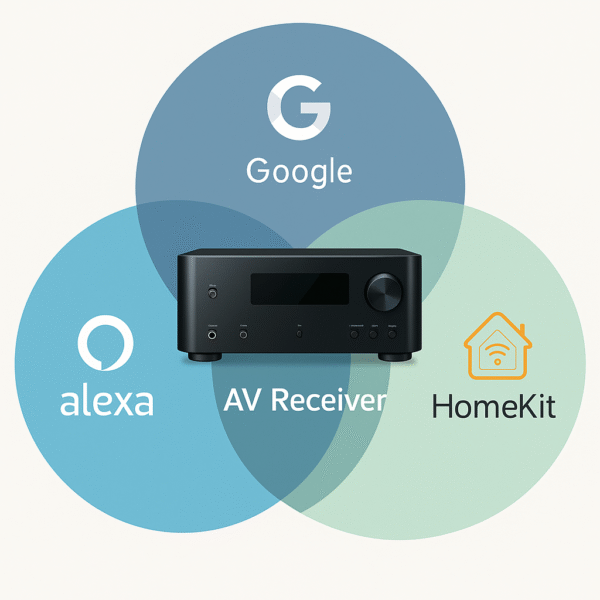
Brand Comparison: AV Receiver Smart Home Integration
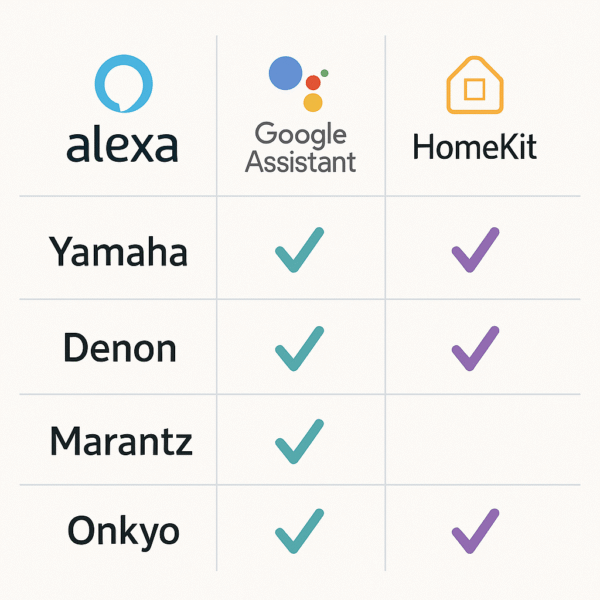
Different brands approach AV receiver smart home integration in unique ways. The table below highlights how the top players support Alexa, Google Assistant, and Siri/HomeKit, along with their app ecosystems:
| Brand | Alexa Support | Google Assistant | Siri / HomeKit | App Ecosystem |
|---|---|---|---|---|
| Yamaha | ✅ Native | ✅ via MusicCast | ✅ via AirPlay 2 | MusicCast |
| Denon | ✅ via HEOS | ✅ via HEOS | ✅ via AirPlay 2 | HEOS |
| Marantz | ✅ via HEOS | ✅ via HEOS | ✅ via AirPlay 2 | HEOS |
| Onkyo | ✅ Built-in | ✅ via Google Home | ❌ (AirPlay only) | Onkyo Controller |
| Pioneer | ✅ Skill-based | ✅ via Google Home | ❌ | Pioneer Remote |
✅ Takeaway: Yamaha, Denon, and Marantz lead in full ecosystem coverage, offering Alexa, Google, and Siri/HomeKit compatibility. Onkyo and Pioneer deliver solid Alexa and Google support but lack deeper Apple integration.
How Voice Assistants Enhance AV Smart Integration
Each major voice assistant adds unique strengths to AV receiver smart home integration. By choosing the right ecosystem, you can unlock more automation and control for your home theater.
✅ Alexa
Create custom voice routines such as “Movie Night” that sync lights, TV, and receiver.
Adjust receiver volume with hands-free commands.
Power your AV receiver on or off through routines or voice prompts.
Seamlessly integrates with Fire TV, smart lights, and thermostats for full-scene automation.
✅ Google Assistant
Use simple commands like “Turn on the receiver” for effortless control.
Group the AV receiver into multi-room audio zones.
Connect via Chromecast to route TV audio through your receiver.
✅ Siri (via HomeKit + AirPlay 2)
Control receiver volume directly from iPhone, iPad, or Mac.
Group your receiver with other HomeKit-compatible speakers for synchronized playback.
Use the Shortcuts app to trigger custom smart home scenes.
✅ Together, these platforms make AV receiver smart home integration more versatile than ever, giving you the freedom to pick the assistant that best fits your ecosystem.
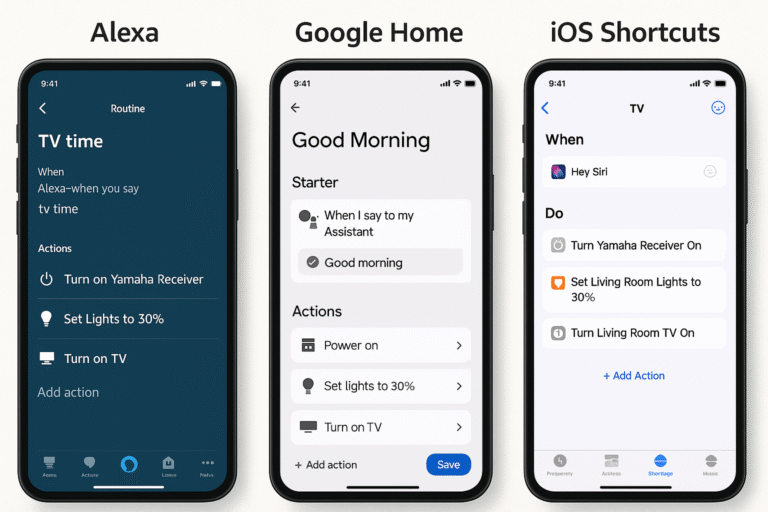
Real-World Scenarios
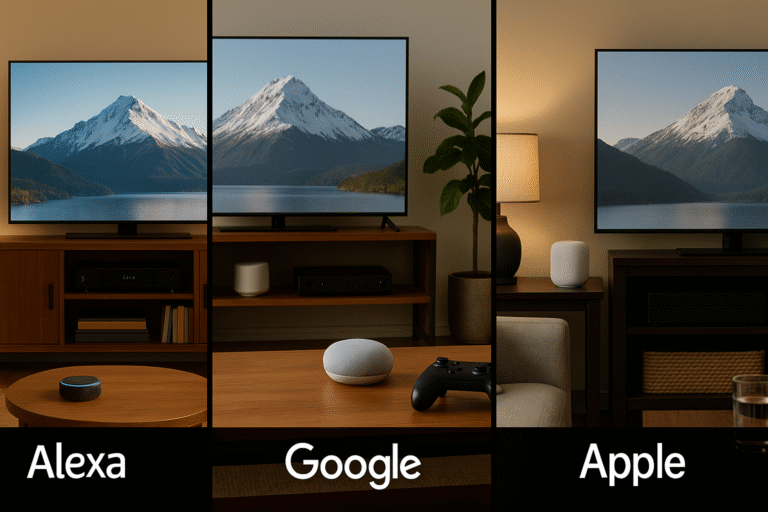
The way you set up your AV receiver depends largely on which smart home ecosystem you prefer. Here are three examples of how AV receiver smart home integration works across Alexa, Google, and Apple platforms:
🔹 Alexa-Centric Home Theater
Receiver: Yamaha RX-V6A
Smart Devices: Echo Dot + Hue Lights + Fire TV Cube
Routine Example: Say “Alexa, start movie night” and Alexa dims the lights, powers on the AV receiver, and launches Fire TV for a seamless theater experience.
🔹 Google Home Integration
Receiver: Onkyo TX-NR7100
Smart Devices: Google Nest Hub + Chromecast + TP-Link Plugs
Routine Example: Say “Hey Google, let’s play music” and Google groups the AV receiver with speakers across your home, activating a synchronized audio setup.
🔹 Apple Ecosystem Setup
Receiver: Marantz Cinema 50
Smart Devices: Apple TV 4K + iPhone + Lutron Caseta Lighting
Routine Example: Use Siri Shortcuts in the Home app to control the AV receiver and lights together, creating a premium Apple-first home theater scene.
✅ These scenarios highlight how AV receiver smart home integration adapts to different ecosystems, allowing you to choose the best setup based on your preferred assistant.
Best Practices for AV Receiver Smart Home Integration
To get the most out of AV receiver smart home integration, small adjustments in setup and naming can make everyday control far smoother:
Use Intuitive Device Names – Label your receiver something clear like “Living Room AVR” for easy recognition by Alexa, Google, or Siri.
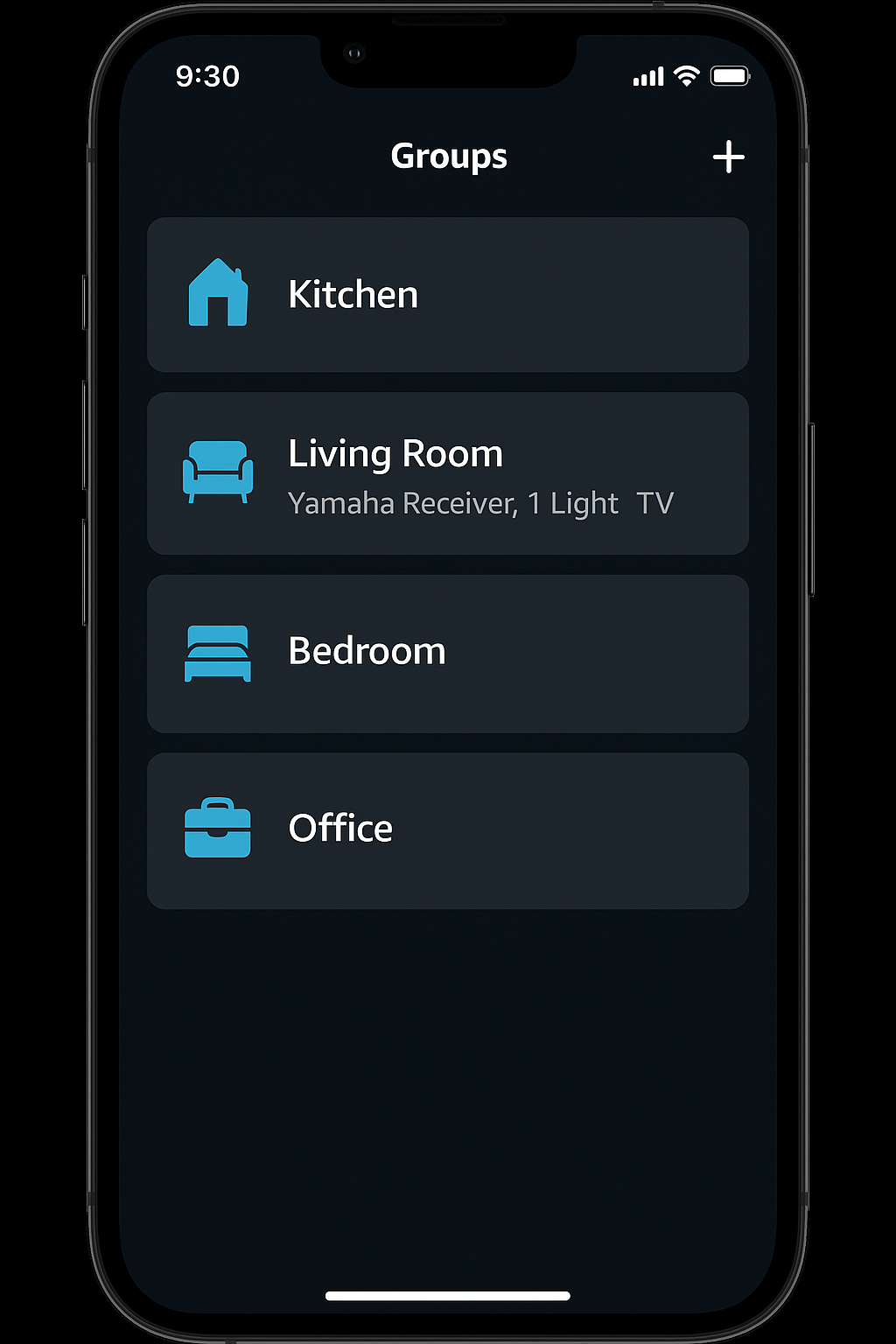
Group Devices by Room – In the Alexa app, Google Home, or Apple Home app, create room-based groups so a single command controls lights, TVs, and the receiver together.
Enable AirPlay 2 – For Apple users, turn on AirPlay 2 to allow Siri voice control directly from iOS devices.
Keep Firmware Updated – Regularly update your AV receiver’s firmware to ensure compatibility with the latest voice features and ecosystem integrations.
✅ Following these best practices ensures your home integration is smooth, reliable, and future-ready.
Conclusion: AV Smart Home Integration in 2025
Modern AV receiver smart home integration has transformed receivers from simple audio processors into full smart home hubs. Whether you prefer Alexa, Google Assistant, or Siri, leading brands like Yamaha, Denon, and Onkyo now offer seamless compatibility, enabling automation and effortless voice control of your home theater.
Ultimately, the best choice depends on your existing ecosystem. But in 2025, all three voice assistants can enhance your listening and viewing experience — letting you manage your home theater without lifting a finger.
✅ With the right setup, this integration turns your entertainment center into the heart of a connected, voice-driven home.