
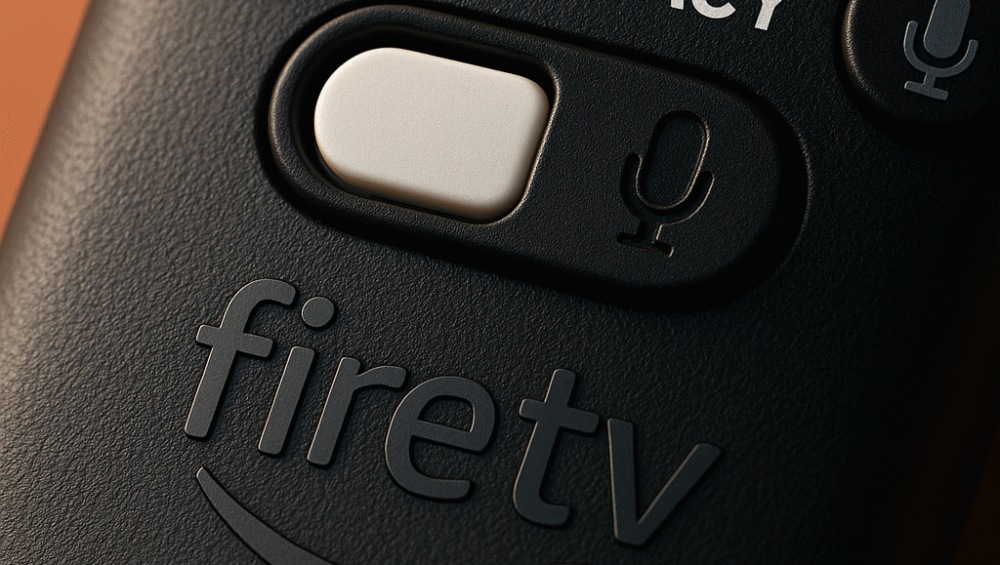
Smart TVs are getting smarter, and in 2025, built-in Alexa functionality has become a core feature across major brands like Amazon’s Fire TV Omni Series, Samsung’s QLED lineup, and LG’s webOS-powered OLEDs. As a result, many homeowners are beginning to wonder whether their TV’s built-in assistant can replace their standalone Echo devices. This brings us to an important question — when it comes to Alexa TV voice control vs Echo, can your television truly take over as your main voice assistant?
In this blog, we’ll explore this comparison in depth, examining voice recognition accuracy, smart home integration, audio quality, and routine compatibility. Moreover, we’ll help you determine whether replacing your Echo speaker with your Alexa-enabled TV is a smart upgrade — or if these devices are actually better when used together for a more connected and efficient smart home experience.
What Modern Alexa TVs Can Do Beyond Streaming
Today’s Alexa-integrated smart TVs have evolved far beyond basic entertainment functions. When comparing Alexa TV voice control vs Echo, it’s clear that these TVs now perform many of the same tasks traditionally handled by standalone speakers—making them powerful all-in-one smart home hubs.
Here’s what they’re capable of:
Turn your TV on or off with voice commands, no remote required.
Launch popular apps like Netflix, Prime Video, and YouTube effortlessly.
Control smart home devices, including lights, plugs, and thermostats.
Set timers, ask questions, or get weather updates directly through the TV.
Create and activate Alexa routines for hands-free automation.
As a result, Alexa TV voice control vs Echo isn’t just a matter of convenience—it’s about redefining how your entertainment center interacts with your entire home.

When comparing Alexa TV voice control vs Echo, it’s important to understand how different TVs integrate with Alexa. Not all models offer the same level of functionality—some include Alexa directly, while others depend on a nearby Echo device for control.
Alexa Built-In: These TVs feature native Alexa functionality, meaning no Echo device is required. You can speak directly to your TV using wake words like “Alexa” to control power, apps, volume, and even smart home devices.
Alexa Compatible: These TVs connect to Alexa through a nearby Echo speaker. While still voice-enabled, commands are relayed via your Echo device instead of the TV’s built-in microphone.
In essence, Alexa Built-In TVs provide a more seamless experience, while Alexa Compatible models are great if you already have Echo speakers positioned throughout your home. Both options extend the power of Alexa TV voice control vs Echo, offering flexible ways to manage entertainment and automation.
Microphone Performance: Alexa TV Voice Control vs Echo
When evaluating Alexa TV voice control vs Echo, one of the biggest differences lies in microphone performance. Echo speakers are designed primarily for voice capture, featuring advanced far-field microphone arrays that can hear you clearly—even with background noise or music playing.
Meanwhile, many TVs with Alexa built-in now include far-field microphones, but their effectiveness varies depending on brand and placement. Here’s a quick comparison:
| Device | Microphone Range | Always Listening? | Best Use Case |
|---|---|---|---|
| Echo Dot (5th Gen) | Up to 25 ft | ✅ Yes | Small to medium rooms |
| Fire TV Omni QLED | Up to 15 ft | ✅ Yes | Media rooms or living areas |
| Samsung QN90C | ~10 ft (via remote) | ❌ No (push-to-talk) | Voice-initiated controls |
In summary, Echo devices still lead in voice pickup range and accuracy, especially in large or noisy spaces. However, built-in mics on newer TVs are improving rapidly—making Alexa TV voice control vs Echo a closer match than ever for everyday use.
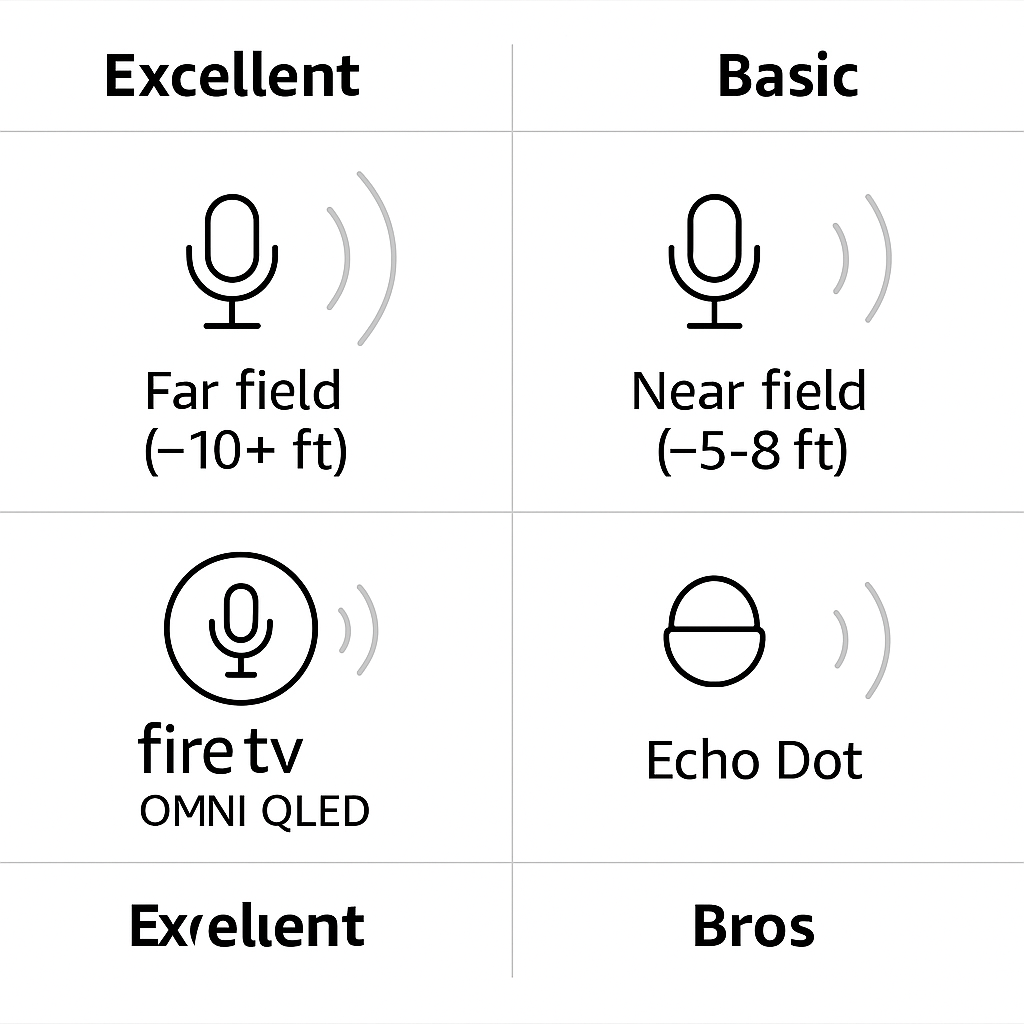
In conclusion, while TVs with Alexa built-in are rapidly improving in both microphone quality and responsiveness, Echo speakers still hold the edge when it comes to consistent voice recognition and far-field accuracy.
Modern smart TVs now offer impressive convenience by combining entertainment and automation in one device. However, Echo speakers remain superior for always-on listening, especially in larger or noisier rooms.
Ultimately, the best setup isn’t about choosing one over the other. Instead, pairing both creates a seamless Alexa ecosystem—where Alexa TV voice control vs Echo becomes a collaboration, delivering smarter, more responsive, and hands-free control across your entire home.
Audio Quality Comparison: Alexa TV Voice Control vs Echo
When it comes to Alexa TV voice control vs Echo, another key factor to consider is audio performance. While modern smart TVs such as the Samsung Frame and LG OLED C3 now feature improved built-in speakers, they still fall short of what dedicated Echo speakers or smart soundbars can deliver.
Here’s how they compare in real-world use:
| Feature | Echo Studio | Fire TV Omni QLED (65″) |
|---|---|---|
| Speaker Type | 3D spatial + bass woofer | Standard TV speakers |
| Music Playback | Excellent | Average |
| Voice Feedback | Clear & deep | Flat, less defined |
In short, TVs are getting better at producing clear dialogue and balanced sound, but Echo speakers remain unmatched for rich, room-filling audio. If you’re seeking immersive sound along with reliable voice control, pairing your smart TV with an Echo Studio or Alexa-enabled soundbar offers the best of both worlds.
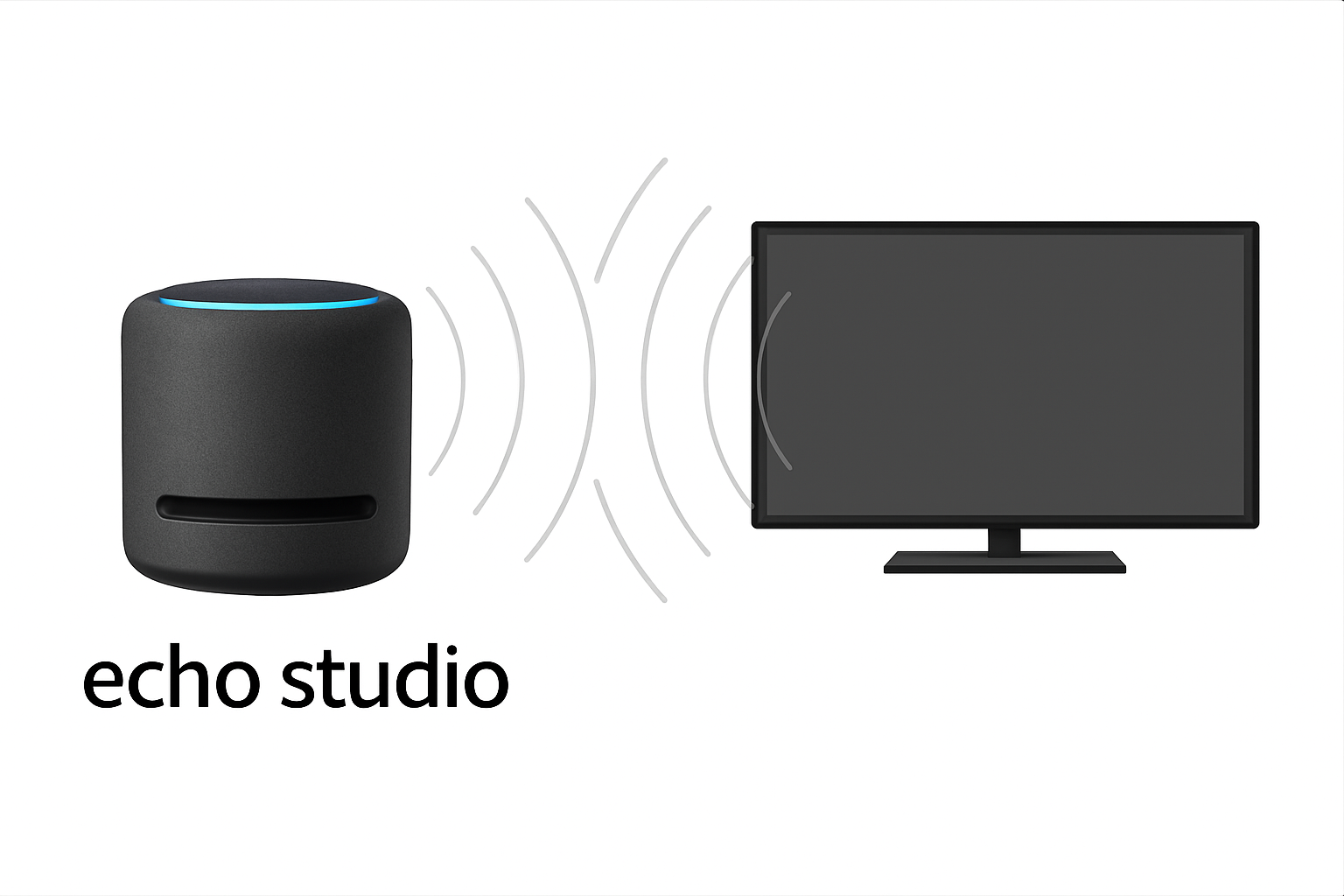
Pro Tip: For the ultimate setup, pair your smart TV with an Alexa-enabled soundbar such as the Sonos Beam Gen 2. This combination gives you the best of both worlds — premium, room-filling sound from the soundbar and seamless Alexa TV voice control for effortless hands-free entertainment and smart home management.
Centralized Smart Home Control: A Key Advantage of Alexa TV Voice Control vs Echo
One of the biggest reasons to embrace Alexa TV voice control vs Echo is the ability to turn your television into a centralized smart home command center. Instead of juggling multiple devices, you can manage your entire connected home right from the couch.
Here’s what this integration makes possible:
Dim smart lights before movie time for a cinematic experience.
Ask Alexa to display your front door camera feed directly on-screen.
Adjust your thermostat without pausing your show.
Automate full scenes like “Movie Mode” or “Morning Routine.”
Most newer TVs now integrate directly with Alexa Routines, allowing you to create multi-device automations that include your TV. However, it’s worth noting that TVs may have slightly delayed command processing compared to Echo speakers due to heavier system loads or slower wake times.
Even so, this level of integration makes Alexa TV voice control vs Echo less of a competition and more of a collaboration—delivering smarter, more immersive control over your entire home ecosystem.

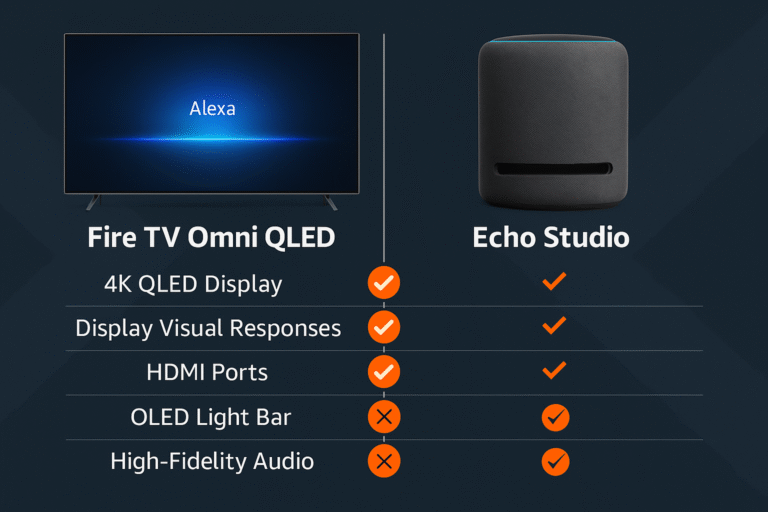
Fire TV Omni vs Echo Studio: Which One Reigns Supreme?
When comparing Alexa TV voice control vs Echo, your ideal choice ultimately depends on what you value most — smart home convenience or superior audio performance. Both devices excel in different areas, and together, they can create a seamless voice-first ecosystem.
🔷 Choose Fire TV Omni QLED if you want:
Built-in Alexa for true hands-free TV control
Smart hub capabilities to manage connected devices
On-screen visual feedback for commands and routines
🔷 Stick with Echo Studio if you prioritize:
High-fidelity music playback with 3D spatial audio
Crystal-clear voice recognition from any direction
Dedicated speaker performance for immersive sound
🏆 Winner for Audio: Echo Studio
🏆 Winner for Smart Control + Display: Fire TV Omni QLED
In the end, both complement each other perfectly — pairing your Echo Studio with a Fire TV Omni QLED delivers the ideal balance of premium sound, powerful voice control, and integrated smart home management.
What About Privacy?
A common question in the Alexa TV voice control vs Echo debate is whether Alexa-enabled TVs are always listening. This concern is understandable, especially as smart TVs become more integrated into our daily lives.
The good news is that most modern Alexa TVs include clear privacy controls to give users peace of mind. These options typically include:
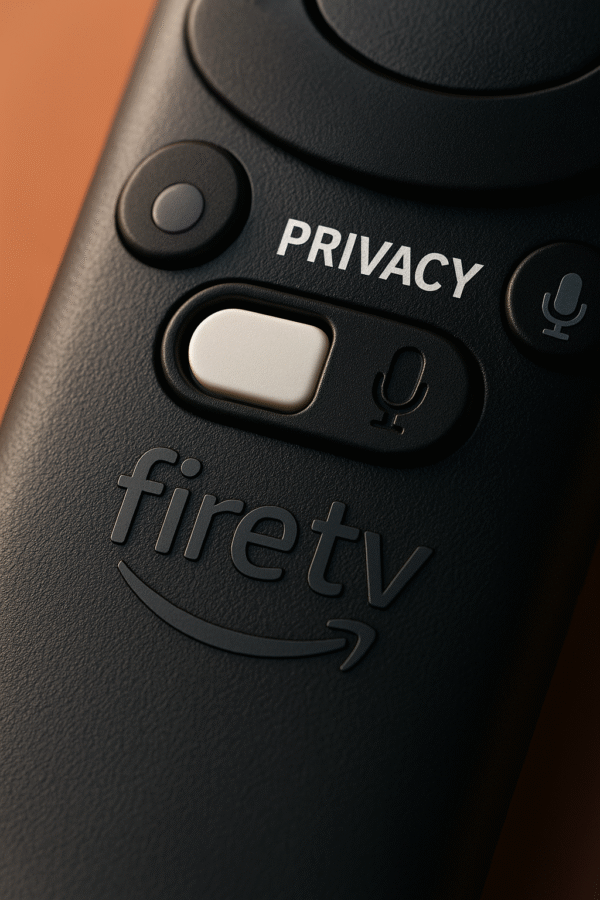
A physical microphone switch on the TV or remote that completely disables listening.
On-screen privacy settings allowing you to toggle voice detection on or off at any time.
Just like Echo speakers, Alexa TVs display visual cues (such as light indicators or on-screen icons) when the microphone is active or muted.
In short, while TVs with Alexa are capable of listening for wake words, you remain in full control of when and how they do so—making privacy manageable without sacrificing the convenience of hands-free Alexa TV voice control.
Alexa TV Voice Control vs Echo: Final Comparison
When it comes to Alexa TV voice control vs Echo, the two devices excel in different areas. Echo speakers deliver unmatched clarity and sound precision, while Alexa-enabled TVs offer convenience and visual integration that streamline your smart home setup.
Here’s a quick performance breakdown:
| Task | Echo Speaker | Alexa TV |
|---|---|---|
| Voice Clarity (far-field) | ✅✅✅ | ✅✅ |
| Music Quality | ✅✅✅ | ✅ |
| Smart Home Control | ✅✅✅ | ✅✅✅ |
| Routine Triggering | ✅✅✅ | ✅✅ |
| Display & Visuals | ❌ | ✅✅✅ |
Final Thoughts
If audio fidelity and voice accuracy are your top priorities, the Echo speaker still reigns supreme. However, for those who value space-saving convenience, on-screen visuals, and all-in-one smart control, TVs with Alexa are quickly becoming a strong alternative.
And when paired with an Alexa-enabled soundbar, you get the perfect hybrid—premium sound quality combined with seamless hands-free voice control—bringing the best of both worlds into your smart home setup.