
When choosing a smart soundbar in 2025, two models stand out above the rest — the Sonos Beam Gen 2 vs Sonos Arc. Both crafted by Sonos, they integrate effortlessly into modern smart homes while delivering rich, immersive sound experiences. However, they cater to different spaces, needs, and budgets. In this detailed Sonos Beam Gen 2 vs Sonos Arc comparison, we’ll explore how the two differ in design, audio performance, Dolby Atmos handling, smart features, pricing, and room suitability, helping you make the most informed buying decision for your home.
Size and Design: Compact vs. Cinematic
The Sonos Beam Gen 2 vs Sonos Arc comparison begins with design and size — two factors that strongly influence placement and room fit.
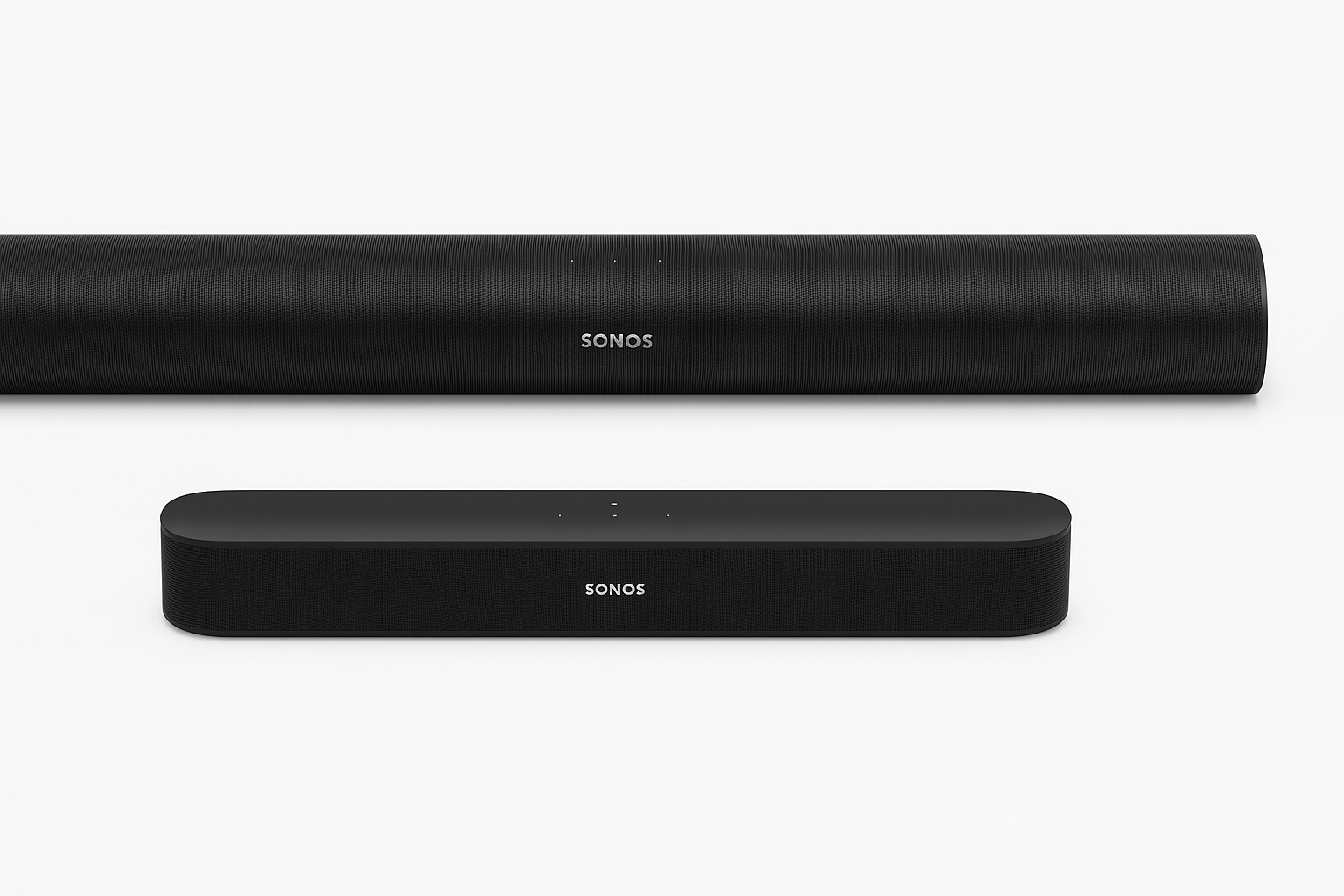
The Sonos Beam Gen 2 measures only 26 inches wide, making it ideal for smaller TVs (32–55″) and compact environments such as apartments, bedrooms, or home offices. With its minimalist curved edges and single-bar form factor, it blends seamlessly into modern interiors without drawing attention away from the screen.
In contrast, the Sonos Arc stretches to 45 inches, clearly designed for larger living rooms or dedicated home theaters. Its elongated, more substantial build complements TVs 55 inches and above, giving it a commanding presence that enhances cinematic setups while maintaining Sonos’s signature clean aesthetic.
Audio Performance: Big Sound in Any Room
When it comes to audio configuration and performance, the Sonos Beam Gen 2 vs Sonos Arc comparison highlights a major difference in scale and immersion.
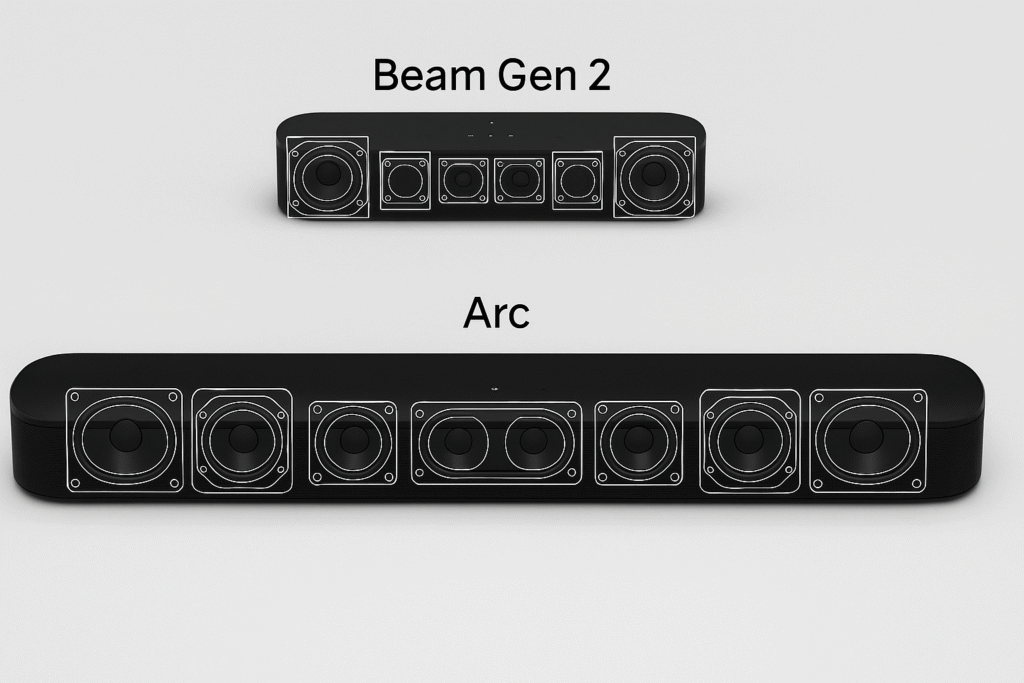
The Sonos Beam Gen 2 features a 3.0 channel setup that relies on software-based virtual surround processing to create simulated height effects. It includes five Class-D digital amplifiers, a center tweeter, and four elliptical midwoofers, producing clear dialogue and balanced sound that comfortably fills small to medium-sized rooms.
Meanwhile, the Sonos Arc steps up to a 5.0.2 channel configuration, complete with dedicated upward-firing drivers that deliver authentic Dolby Atmos height effects. With 11 high-performance speakers, including angled side tweeters and woofers, the Arc generates a true 3D surround experience—perfect for larger rooms and users seeking cinematic, theater-grade depth and realism.
Dolby Atmos Performance: Virtual vs. Real Elevation
When comparing Dolby Atmos performance in the Sonos Beam Gen 2 vs Sonos Arc, the distinction comes down to simulation versus true hardware-based immersion.
The Sonos Beam Gen 2 uses psychoacoustic processing to simulate Dolby Atmos effects, creating an illusion of height and spatial depth. While this approach works well in small to mid-sized rooms, the virtual height effect tends to diminish in open layouts or rooms with tall ceilings, where sound reflections are harder to achieve.
In contrast, the Sonos Arc delivers true Dolby Atmos through dedicated upward-firing speakers that bounce audio off the ceiling to produce realistic vertical immersion. This difference becomes immediately clear in action scenes or movies featuring rainfall, helicopters, or aircraft flyovers, where the Arc provides a far more convincing, theater-like overhead experience.
Smart Assistant Integration: Alexa and Google Built-In
In terms of smart features and connectivity, the Sonos Beam Gen 2 vs Sonos Arc comparison reveals that both models are equally capable when it comes to voice and app control.
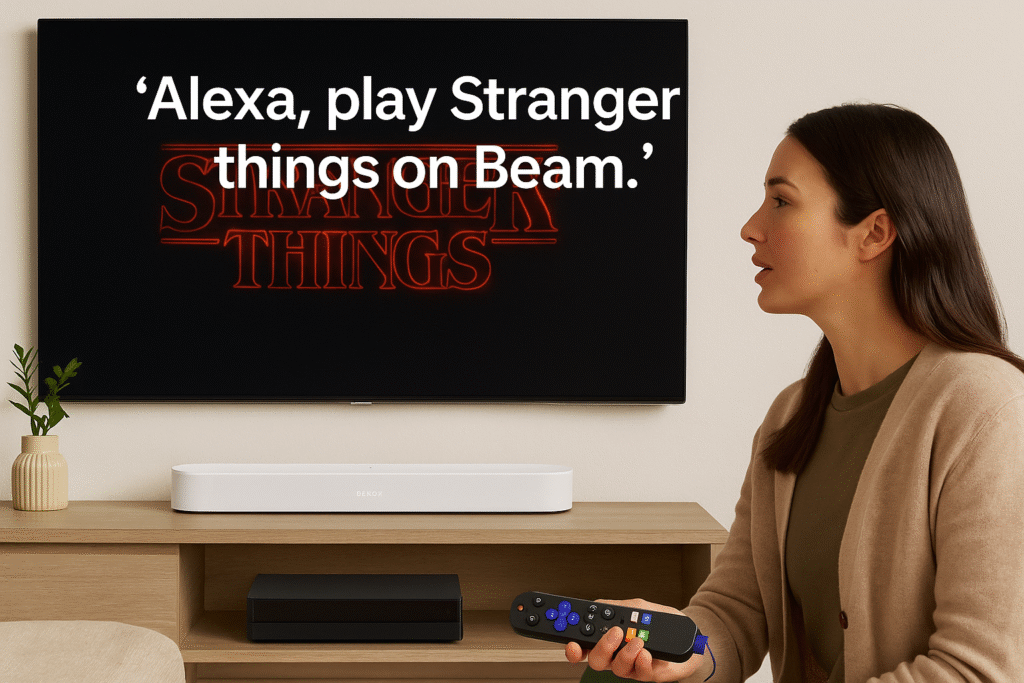
Both soundbars come with Amazon Alexa and Google Assistant built right in, enabling hands-free control for playback, volume adjustments, and general voice commands. You can also ask for weather updates, news briefings, or control smart home devices—all without touching a remote.
Additionally, both models support Apple AirPlay 2, allowing seamless streaming from iPhones, iPads, and Macs. Through the Sonos app, users can easily group rooms, fine-tune EQ settings, and integrate streaming services, making both the Beam Gen 2 and Arc highly flexible options for any connected home ecosystem.
Connectivity and Control
When it comes to connectivity and integration, the Sonos Beam Gen 2 vs Sonos Arc are nearly identical in delivering premium, future-ready features for smart entertainment setups.
Both models include HDMI eARC, ensuring high-bandwidth audio formats like Dolby Atmos are transmitted without compression for maximum sound quality. They also offer Ethernet ports for reliable wired connections and Wi-Fi 5 support for smooth, stable streaming across all devices.
Control options are equally versatile — users can operate either soundbar through the Sonos app, standard IR remotes, or voice commands via Alexa or Google Assistant. Furthermore, for those already in the Sonos ecosystem, both the Beam Gen 2 and Arc integrate flawlessly into multi-room setups, allowing synchronized playback and effortless expansion throughout your home.
Pricing & Value – Sonos Beam Gen 2 vs Sonos Arc
When comparing prices, the Sonos Beam Gen 2 vs Sonos Arc highlights a clear difference in positioning and target audience.
Sonos Beam Gen 2: MSRP ~$449 – Offers exceptional value for users with smaller spaces or those new to the Sonos ecosystem. It delivers impressive sound quality, smart features, and Dolby Atmos simulation at a very approachable price point.
Sonos Arc: MSRP ~$899 – Positioned as a premium option, the Arc justifies its higher cost with true Dolby Atmos performance, larger soundstage, and theater-grade audio depth. It’s the ideal choice for users who prioritize cinematic immersion and want the best that Sonos has to offer.
In summary, the Beam Gen 2 shines as the budget-friendly all-rounder, while the Arc delivers the ultimate home theater experience for those ready to invest in flagship performance.
Room Suitability – Sonos Beam Gen 2 vs Sonos Arc
When choosing between the Sonos Beam Gen 2 vs Sonos Arc, room size and acoustics play a major role in overall performance.
Sonos Beam Gen 2:
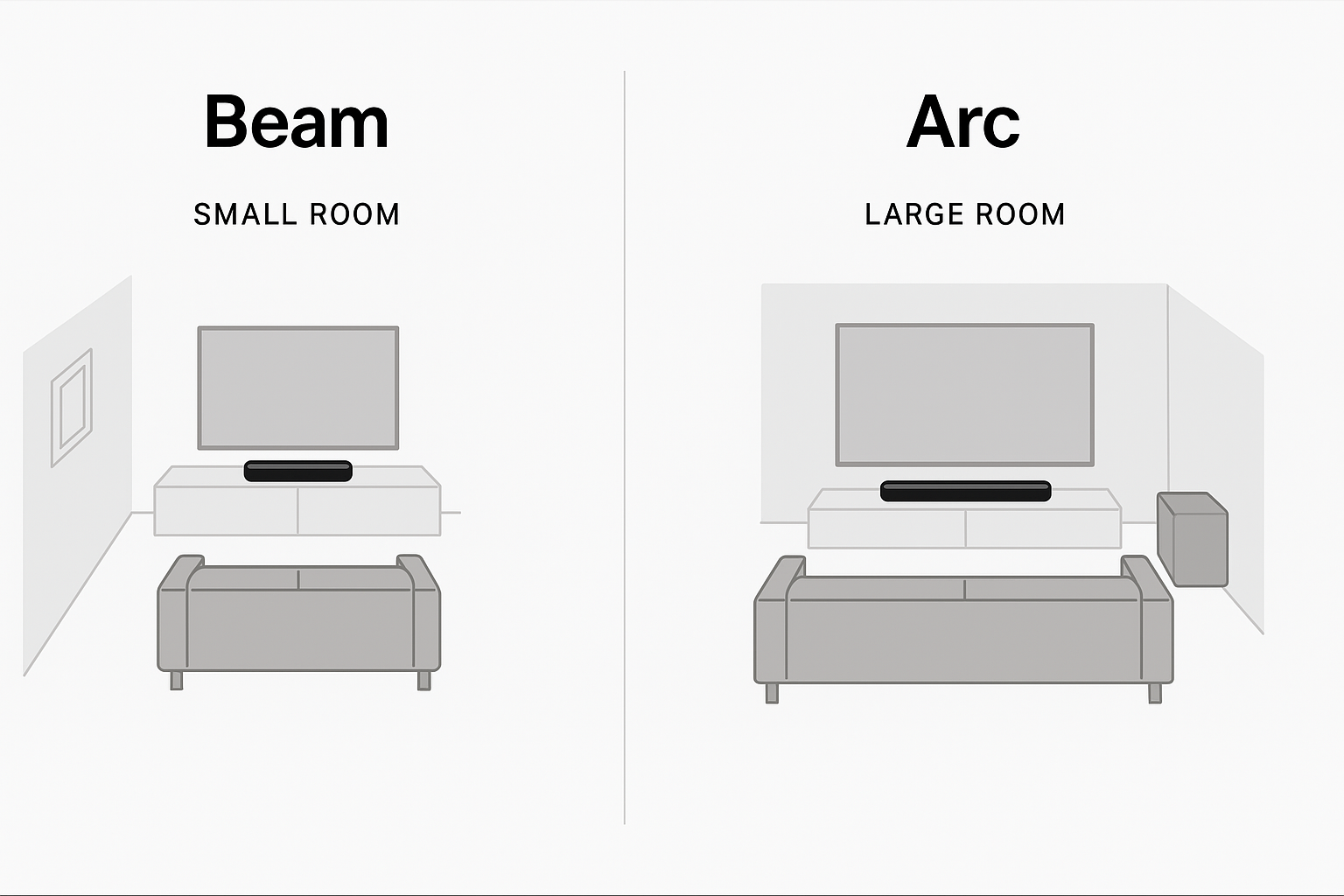
Ideal for compact spaces under 250 sq. ft., the Beam excels in bedrooms, offices, or smaller living rooms. It can be mounted under a TV or placed on a media console, maintaining a clean, minimalist look. For best results, it performs optimally in rooms with ceilings below 10 feet, where its virtual Dolby Atmos effects can reflect sound more effectively.Sonos Arc:
Designed for larger rooms or open floor plans over 300 sq. ft., the Arc is perfect for home theaters or expansive living areas. It can be mounted neatly under large wall-mounted TVs and thrives in environments with vaulted or high ceilings, allowing its upward-firing drivers to fully express the height dimension of true Dolby Atmos audio.
In short: The Beam Gen 2 is best for smaller, controlled spaces, while the Arc dominates larger rooms needing deep, expansive sound coverage.
Final Verdict – Sonos Beam Gen 2 vs Sonos Arc
When deciding between the Sonos Beam Gen 2 vs Sonos Arc, your choice ultimately depends on your space, budget, and audio expectations.
If you’re outfitting a smaller room and want premium sound with built-in smart features, the Sonos Beam Gen 2 is the perfect choice. It’s compact, affordable, and delivers impressively rich sound that far exceeds its size — ideal for bedrooms, apartments, or secondary entertainment zones.
However, if your goal is to build a true home theater experience, the Sonos Arc is unmatched. With dedicated upward-firing Dolby Atmos drivers, deep bass, and cinema-grade spatial sound, it transforms large rooms into immersive entertainment spaces.
Recommendation Summary:
Sonos Beam Gen 2 → Best for small rooms, budget-conscious users, and entry-level smart sound setups
Sonos Arc → Best for large spaces, audiophiles, and home theater enthusiasts seeking premium Dolby Atmos immersion
3 Comments
I was torn between the Beam Gen 2 and the Arc, but after comparing, the Beam fits my smaller living room perfectly without sacrificing sound quality. If you want great Dolby Atmos on a budget, Beam is the way to go.
I started with the Beam Gen 2 and might upgrade to the Arc eventually. The Beam sounds amazing for the price and is super easy to set up with my existing Sonos system. Definitely a smart buy for most people.
Went with the Arc because of the extra speakers and bigger soundstage. If you have a larger room and want immersive audio, it’s totally worth the premium. Both are excellent, but it depends on your space and budget.