
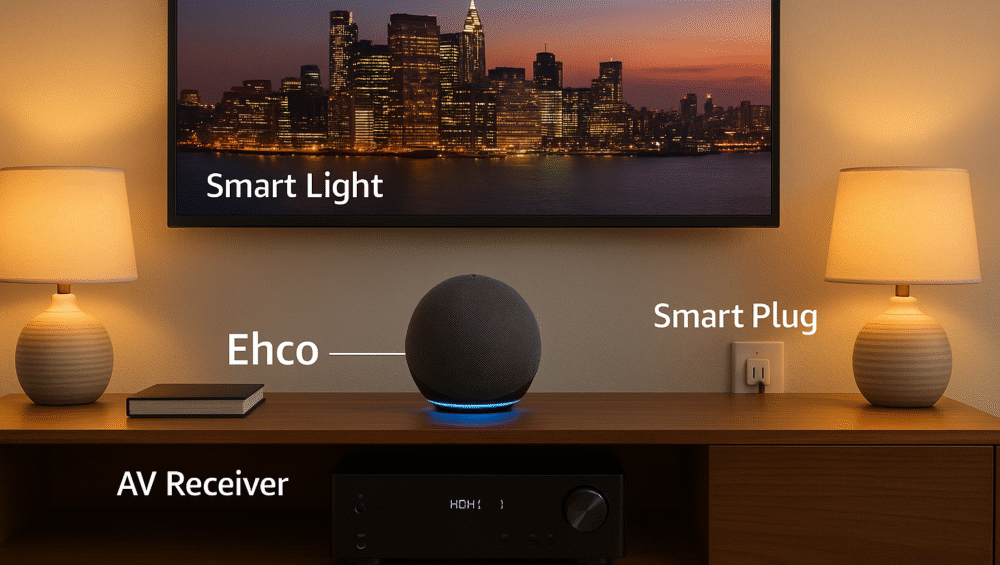
If you’re tired of juggling multiple remotes — one for the TV, another for your receiver, and yet another for streaming — the question naturally comes up: Can Alexa fully replace a universal remote in your home theater setup?
In 2025, voice assistants like Amazon Alexa have grown much more capable, with deep integration across AV receivers, smart TVs, soundbars, and even lighting systems. However, the debate of Alexa vs universal remote comes down to how well Alexa routines and commands can match the control flexibility of a traditional device like the Harmony Hub.
This guide explores the possibilities, limitations, and best setups for making Alexa your true hands-free home theater controller.
Alexa vs Universal Remote: What Alexa Can Do in 2025
When comparing, it’s clear Alexa can already handle many of the most common home theater tasks. With routines, skills, and smart device integration, Alexa is more powerful than ever.
Alexa Support Features
| Function | Alexa Support |
|---|---|
| Power on/off devices | ✅ (via routines or smart plugs) |
| Input switching | ✅ (with compatible AV receivers) |
| Volume control | ✅ (through AV receiver skills) |
| Launch streaming apps | ✅ (Fire TV, limited Roku support) |
| Play/pause media | ✅ |
| Adjust smart lights | ✅ |
| Adjust thermostats | ✅ |
✅ Insight: In the Alexa vs universal remote comparison, Alexa already replaces many day-to-day functions, though device compatibility still defines how complete that replacement is.
Strengths and Weaknesses
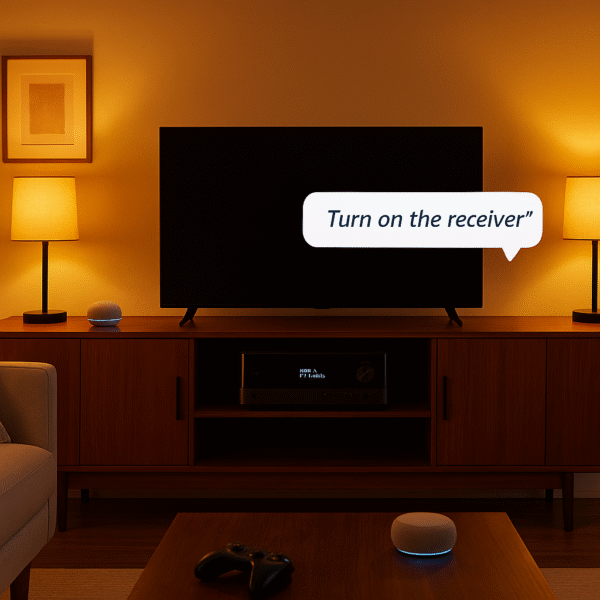
While universal remotes like the Harmony Hub offer traditional control through infrared (IR), Alexa provides a more modern, voice-driven experience. The Alexa vs universal remote comparison comes down to which features matter most to your setup.
Feature Comparison Table
| Feature | Harmony / Universal Remote | Alexa Voice + Routines |
|---|---|---|
| IR Control | ✅ Yes | ❌ No (unless using an IR blaster) |
| Voice Interaction | ❌ No | ✅ Yes |
| Smart Device Integration | Limited | Extensive |
| Routine Automation | ❌ No | ✅ Yes |
| Ease of Setup | Moderate | Easy (if devices are linked) |
✅ Takeaway: In the Alexa vs universal remote debate, Harmony and similar remotes excel with traditional IR control, while Alexa wins for voice interaction, smart home integration, and automation flexibility.
Alexa vs Universal Remote: Real-World Use Cases
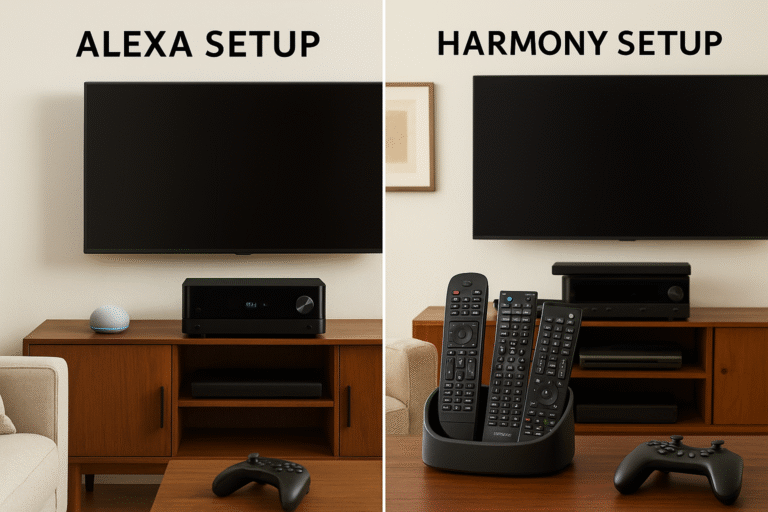
The real strength of Alexa comes through in everyday routines. When comparing Alexa vs universal remote, these hands-free commands show how Alexa can simplify home entertainment.
🎬 Home Theater Scenes
“Alexa, movie night” → Turns on the TV, powers the AV receiver, switches input to HDMI 1, dims lights, and launches Netflix.
🎮 Gaming Sessions
“Alexa, game time” → Turns on the PS5, sets the receiver to HDMI 3, and turns off background lights for focus.
🎵 Music Playback
“Alexa, play Spotify in the living room” → Powers on the receiver, switches to Bluetooth or Wi-Fi source, and adjusts the volume automatically.
✅ Takeaway: In the Alexa vs universal remote debate, Alexa routines deliver far more automation and smart home integration than traditional remotes, turning a series of button presses into a single voice command.
Alexa vs Universal Remote: Limitations to Consider
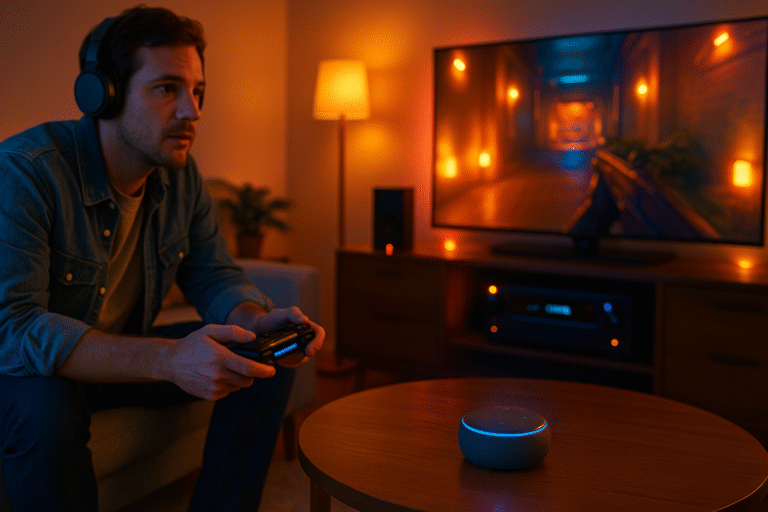
While Alexa routines add convenience, there are still some drawbacks compared to a traditional universal remote. In the Alexa vs universal remote discussion, these limitations matter if you rely on older hardware or need quick manual control.
❌ No native IR control — Alexa cannot directly control older components without additional hardware.
❌ App/platform gaps — Certain services (like Netflix on non-Fire TV devices) may have limited support.
❌ Device compatibility — Performance depends on each brand’s ecosystem and firmware stability.
❌ No physical buttons — Tasks like fast-forward, rewind, or mute are less intuitive by voice.
✅ Solution: Pair Alexa with an IR blaster or smart hub (such as the Broadlink RM4) to extend control and close the gap with traditional remotes.
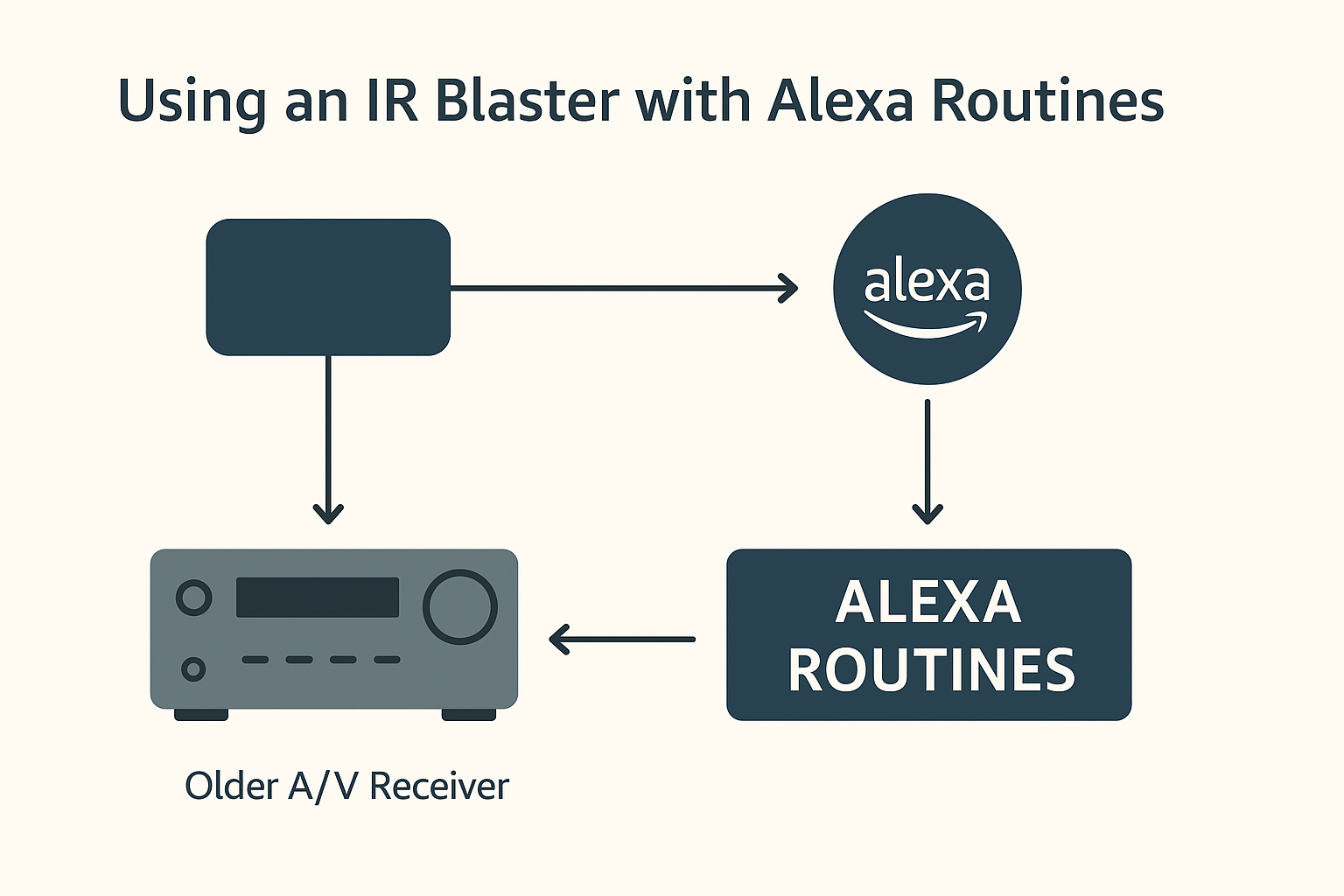
Alexa vs Universal Remote: Devices You’ll Need for Full Control
To make Alexa a true alternative in the Alexa vs universal remote debate, you’ll need the right mix of compatible devices. These ensure Alexa can handle both modern smart gear and older components.
AV Receivers with Alexa Support
Yamaha RX-V6A
Denon AVR-S970H
Onkyo TX-NR6100
Smart TVs with Alexa Skills or Fire TV OS
LG with ThinQ Alexa integration
Samsung SmartThings Alexa skill
Smart Lights & Plugs
Philips Hue
TP-Link Kasa
Lutron Caseta
IR Blaster (For Legacy Gear)
Broadlink RM4
Harmony Hub (legacy support)
SwitchBot Hub 2
✅ Insight: With these devices in place, Alexa can cover nearly every function a traditional remote provides — bridging the gap for most home theater setups.
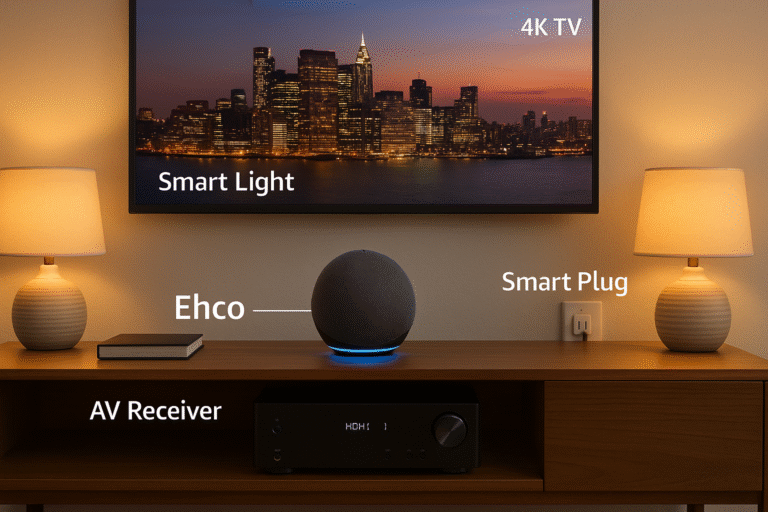
Final Verdict: Alexa vs Universal Remote
For many modern users, the answer is yes — Alexa can replace a universal remote, with a few caveats.
If your AV receiver, smart TV, and streaming device support Alexa, then routines can cover 80–90% of the functions a traditional remote handles. You also gain voice control, automation, and smart home integration that no physical remote can match.
However, in the Alexa vs universal remote debate, older components remain the exception. Legacy devices without Alexa or HDMI-CEC support still require a traditional remote or an IR blaster workaround.
✅ Bottom Line: Alexa is ready to replace a universal remote for most modern setups, but full coverage depends on the gear in your system.