
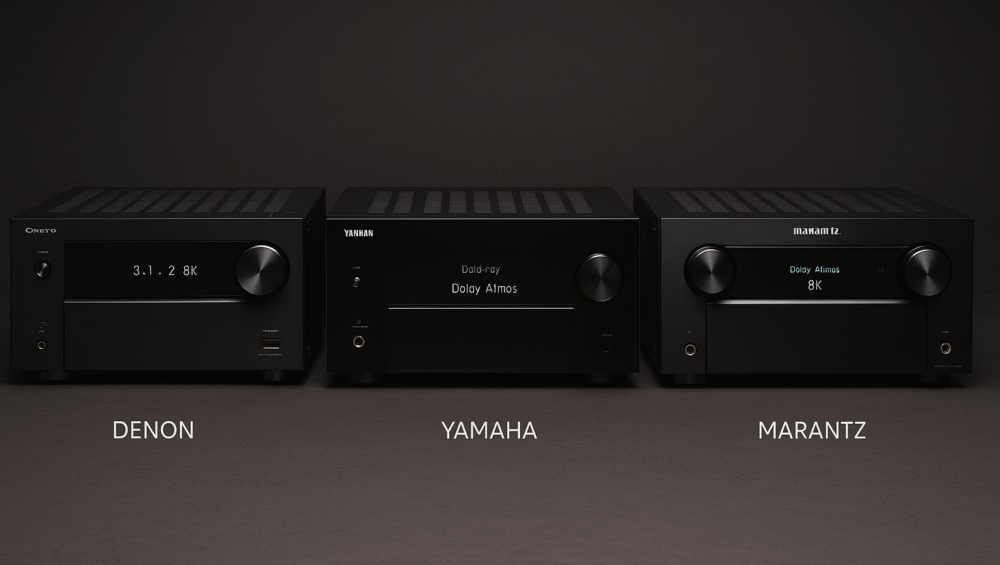
As we move further into the era of ultra-high-definition content, understanding how your AV receiver manages 8K video becomes increasingly important. In 2025, more AV receivers than ever highlight “8K support.” However, not all 8K is created equal.
That’s why terms such as 8K passthrough and native 8K processing appear frequently. Yet, many users are unsure of what they truly mean. To clarify, this guide explains the differences between 8K passthrough vs native 8K processing, explores how each impacts your home theater performance, and highlights which AV receivers provide the best value depending on your specific needs.
What is 8K Passthrough?
In the discussion of 8K passthrough vs native 8K processing, it helps to first understand passthrough. 8K passthrough means the AV receiver can accept an 8K video signal and send it directly to your TV without altering the image. In this mode, the receiver does not scale or process the video; instead, it acts as a transparent channel between your 8K source device (such as a PS5, Xbox Series X, or Apple TV 4K 3rd Gen) and your 8K-compatible display.
✅ Key Characteristics of 8K Passthrough:
Requires an HDMI 2.1 connection for full bandwidth support
Provides minimal latency, which is ideal for competitive gaming
Offers no video enhancement or scaling, ensuring a pure signal transfer

What is Native 8K Video Processing?
In the comparison of 8K passthrough vs native 8K processing, native processing goes beyond simply transferring the video signal. Native 8K processing allows the receiver to upscale lower-resolution content—such as 1080p or 4K—to full 8K, while also optimizing true 8K streams with advanced image enhancements. Unlike passthrough, this process is more CPU-intensive and is typically found in higher-end AV receivers.
✅ Key Benefits of Native 8K Processing:
Upscales older content to 8K resolution for a sharper, more modern viewing experience
May include noise reduction, color enhancement, and motion smoothing for improved picture quality
Provides better compatibility when mixing 8K displays with lower-resolution sources

8K Passthrough vs Native 8K Processing
When comparing 8K passthrough vs native 8K processing, it becomes clear that each serves a different purpose in home theater setups. The table below highlights their key differences:
| Feature | 8K Passthrough | Native 8K Processing |
|---|---|---|
| HDMI 2.1 | ✅ Required for full bandwidth | ✅ Required for full bandwidth |
| Video Upscaling | ❌ Not supported | ✅ Upscales 1080p/4K content to 8K |
| CPU Load | Minimal – low system demand | Moderate–High – more processing power required |
| Ideal Use Case | Gaming and pure signal transfer | Mixed media libraries with varied resolutions |
| Price Tier (2025) | Mid-range (~$600–$900) | Premium (~$1000+) |
✅ In summary: choose 8K passthrough if you want minimal latency and a clean signal for gaming. On the other hand, select native 8K processing if you need advanced upscaling, image enhancements, and broader compatibility across different video sources.

Best Choice for Gamers: 8K Passthrough
If you’re buying an AV receiver primarily for console gaming—whether on PS5 or Xbox Series X—then 8K passthrough is more than sufficient. This is because most 8K gaming is still limited to 30–60 fps, while 4K/120Hz titles continue to dominate the market.
✅ Ideal Gaming Setup with HDMI 2.1:
4K/120Hz support for smooth motion
Low latency mode to reduce input lag
VRR and ALLM enabled for consistent frame pacing
When comparing 8K passthrough vs native 8K processing, native processing provides little advantage for gaming. In fact, it may even introduce latency, making passthrough the better choice for competitive players who demand responsiveness.

Best Choice for Movie Enthusiasts: Native 8K Processing
If you’re consuming Dolby Vision 8K movies, streaming high-resolution nature documentaries, or simply want your older content upscaled for a large 8K display, then a native 8K processor will dramatically enhance your experience. Unlike passthrough, it actively refines the image, delivering sharper details and richer colors.
Receivers from Denon, Marantz, and Anthem feature premium upscaling chips designed to smooth visuals, reduce noise, and sharpen edges. This makes them the top choice when evaluating 8K passthrough vs native 8K processing for cinematic setups.
✅ Recommended Features for Home Cinema:
Native 8K upscaling for older content and mixed sources
eARC support to unlock full Dolby Atmos audio
Dynamic tone mapping to balance brightness and contrast scene by scene

Example AV Receivers: 8K Passthrough vs Native 8K Processing
When shopping for a new receiver, it helps to compare how each model handles 8K passthrough vs native 8K processing. The table below highlights popular 2025 receivers and their core video capabilities:
| Model | Type | HDMI 2.1 Ports | Native 8K Processing |
|---|---|---|---|
| Yamaha RX-V6A | Passthrough only | 3 in / 1 out | ❌ Not supported |
| Denon AVR-X3800H | Processing + Upscaling | 6 in / 3 out | ✅ Supported |
| Marantz Cinema 50 | Processing + Upscaling | 6 in / 3 out | ✅ Supported |
| Onkyo TX-NR6100 | Passthrough only | 3 in / 1 out | ❌ Not supported |
✅ Key Insight:
Yamaha RX-V6A and Onkyo TX-NR6100 are great mid-range options if your priority is low latency gaming with pure 8K passthrough.
Denon AVR-X3800H and Marantz Cinema 50 shine for home theater enthusiasts, thanks to native 8K processing and advanced upscaling features.

Verdict: Choosing Between 8K Passthrough vs Native 8K Processing
In most cases, 8K passthrough is the ideal choice—especially for gamers and budget-conscious home theater builders. It guarantees clean video delivery without interference or signal delay, making it perfect for fast-paced gaming and straightforward setups.
On the other hand, native 8K processing caters to videophiles who want their content upscaled, enhanced, and optimized for a large 8K display. The benefits are most noticeable during movie playback and in high-end home cinema installations, where picture refinement and compatibility truly matter.
Ultimately, understanding the difference between 8K passthrough vs native 8K processing helps you spend wisely, cut through marketing hype, and select the AV receiver that best matches your viewing needs.