
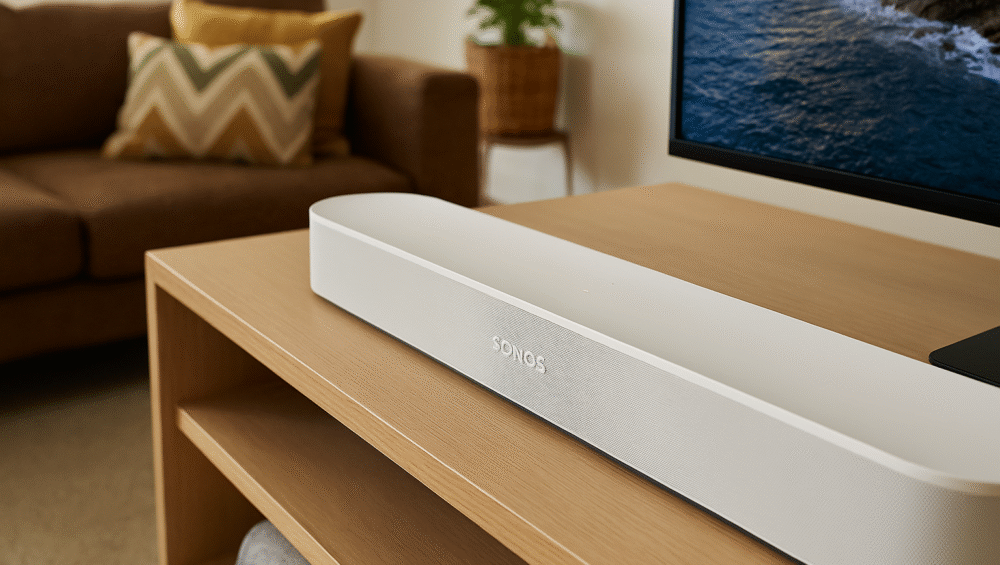
With Dolby Atmos rapidly becoming the industry standard for home theater sound, manufacturers have responded with innovative solutions like virtual Atmos soundbars—devices that simulate height and surround channels without the need for physical overhead speakers. As a result, many buyers are now wondering, are virtual Atmos soundbars worth it in 2025?
In this article, we’ll explore the effectiveness of these systems, breaking down their pros and cons, identifying ideal use cases, and highlighting the top-performing models you can confidently invest in. Moreover, we’ll discuss how technology improvements have made virtual Atmos soundbars more realistic and accessible than ever before.
How Virtual Dolby Atmos Works
Virtual Dolby Atmos relies on advanced digital signal processing (DSP) to bounce sound off your room’s walls and ceiling, effectively simulating a 3D spatial soundscape. Unlike traditional setups that use physical up-firing speakers or in-ceiling units, virtual Atmos soundbars use their internal drivers and intelligent audio processors to create the illusion of vertical height and multidirectional immersion.
As a result, you experience the same enveloping sensation of objects moving above and around you—without needing a complex or space-consuming speaker system. This technology is a key reason why many homeowners today are asking, are virtual Atmos soundbars worth it for compact or minimalist home theater setups?

Virtual Atmos vs True Atmos: What’s the Difference?
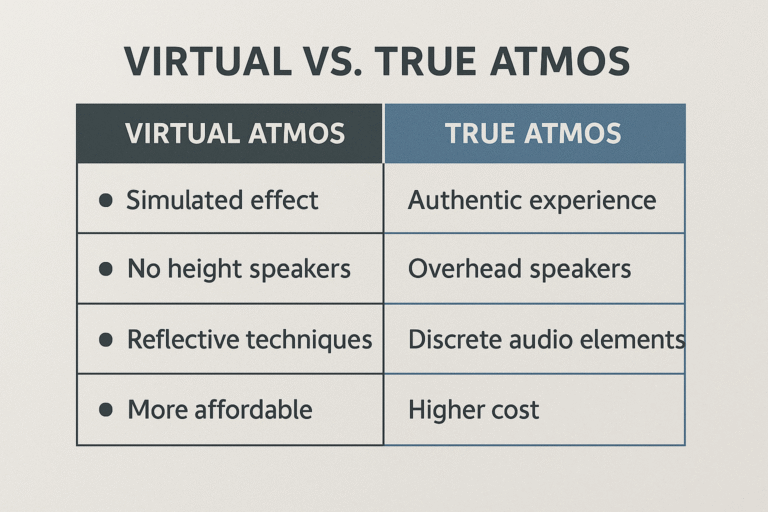
When deciding whether virtual Atmos soundbars are worth it, it helps to understand how they differ from true Dolby Atmos systems. Both aim to create immersive 3D sound, but their approach and performance vary depending on your space and expectations.
| Feature | Virtual Atmos | True Atmos |
|---|---|---|
| Height Speakers | Simulated via DSP | Physical up-firing or ceiling-mounted |
| Room Dependency | Very sensitive to room shape | More consistent across environments |
| Setup Simplicity | Plug-and-play | Requires precise placement/setup |
| Cost | Lower | Higher |
| Sound Quality | Moderate spatial realism | Superior depth and precision |
While virtual Atmos can’t fully reproduce the overhead sound channels of true Atmos, it still offers a remarkably immersive experience for casual viewers. Moreover, for apartment dwellers or users with limited space, virtual Atmos soundbars represent a substantial upgrade over standard stereo or 5.1 setups—delivering dimensional sound without the complexity or high cost of a full surround system.
Best Virtual Atmos Soundbars in 2025
If you’re exploring whether virtual Atmos soundbars are worth it, these three standout models deliver excellent performance without breaking the bank. Each offers immersive audio, smart integration, and value under $600.
1. Sonos Beam Gen 2
Compact and stylish, perfect for smaller living rooms
Supports Dolby Atmos via virtual processing (no up-firing speakers needed)
Seamless integration with Alexa and Google Assistant
Controls via the Sonos app or voice
2. Bose Smart Soundbar 600
Delivers a balanced sound profile with spatial cues
Supports Dolby Atmos, along with Alexa and Google Assistant
Offers optional rear speaker and subwoofer expansions to elevate experience
3. Samsung HW-Q600C
Compatible with Dolby Atmos and DTS:X formats
Includes a wireless subwoofer for deeper bass
Excellent value proposition for medium-sized rooms
These options show that virtual Atmos soundbars are worth it for many setups—giving you immersive, multi-dimensional audio with minimal setup complexity and strong smart home compatibility.

Ideal & Less-Ideal Use Cases for Virtual Atmos Soundbars
✅ Best For
Apartment dwellers with limited space or restrictive speaker placement
Users seeking immersive upgrades without spending on full surround setups
Streamers & casual viewers who rely on services like Netflix, Prime Video, or Disney+
❌ Not Ideal For
Audiophiles who demand precise height-channel effects and object-based accuracy
Homes with large open floor plans where sound can diffuse too much
Dedicated home theaters that already use AVRs and full surround speaker systems
In short, virtual Atmos soundbars are worth it for compact, everyday setups—and they offer a great balance of performance and convenience. But for those chasing high-end precision or large-scale installations, true Atmos systems remain the gold standard.
Setup Tips to Maximize Virtual Atmos Performance
To truly decide whether virtual Atmos soundbars are worth it, proper placement and calibration are essential. Even small adjustments can make a big difference in how effectively the sound reflects and fills your room.
1. Room Shape Matters
Choose a room with flat ceilings and fewer open sides to help sound bounce predictably. The more enclosed and symmetrical the space, the better the simulated height and surround effects will sound.
2. Position Correctly
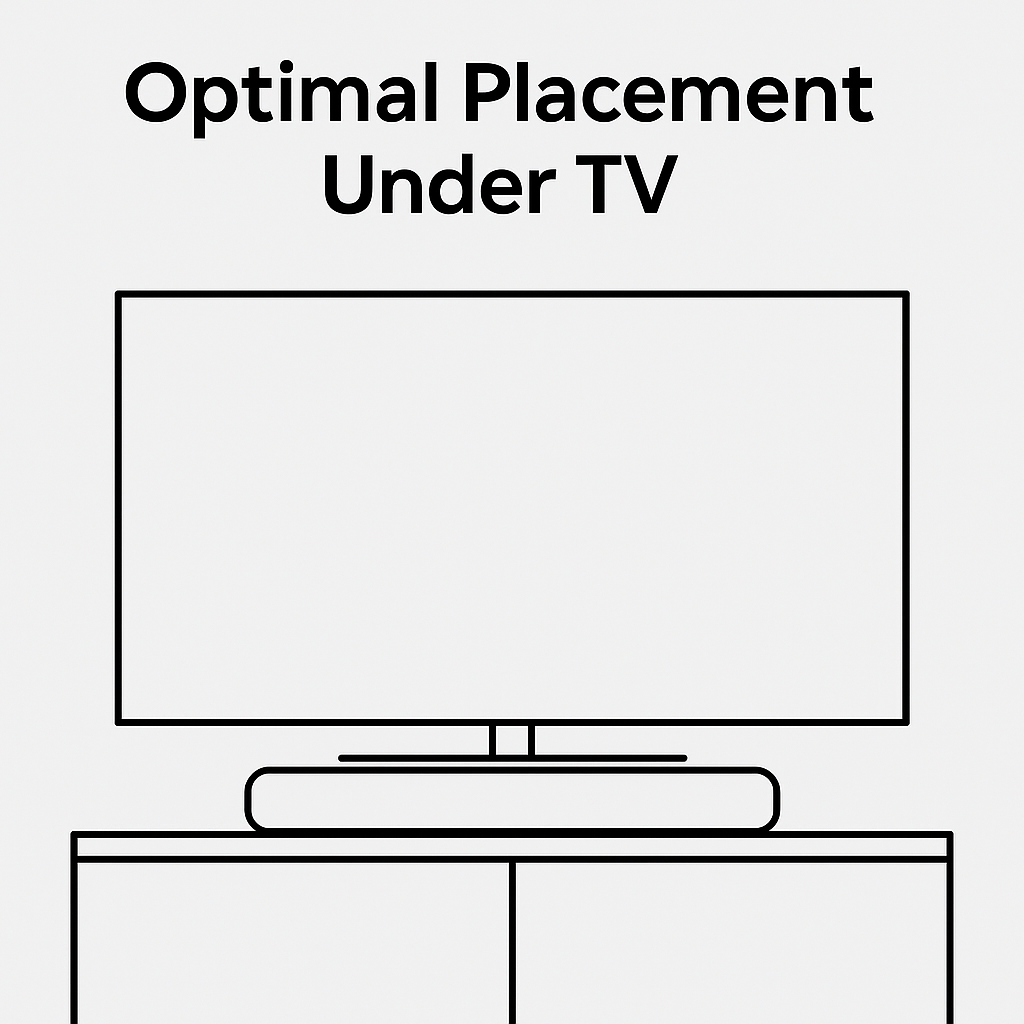
Mount or place your soundbar level with your TV, ensuring it’s not inside a cabinet or behind objects that could block sound reflections. Proper positioning allows the DSP to project sound accurately.
3. Run Calibration
Use the companion app (Sonos, Bose, or Samsung) to run room calibration. This process adjusts EQ and reflection timing for your unique room layout, improving spatial realism.
4. Pair With a Subwoofer
Add a wireless subwoofer to reinforce bass depth and overall sound balance. Strong low-end support enhances the sense of scale, making virtual Atmos soundbars feel more expansive and immersive.
When set up correctly, these steps can make virtual Atmos soundbars worth it for most living rooms—offering near-cinematic audio without the complexity of a multi-speaker system.
When to Upgrade from Virtual to True Atmos
While virtual Atmos soundbars deliver a significant improvement over standard stereo or 5.1 setups, they’re not a one-size-fits-all solution. For many users, they strike the perfect balance between simplicity and immersion. However, in certain setups, moving beyond virtual processing may be the smarter choice.
You should consider upgrading if you:
Have a large living room where sound reflections lose accuracy.
Frequently host movie nights and want the most cinematic, theater-like experience.
Own an AVR or plan to invest in one, allowing for a full multi-speaker Dolby Atmos configuration.
In these cases, stepping up to a true Atmos system will reward you with greater immersion, clarity, and precision in height effects. Still, for everyday users in compact spaces, virtual Atmos soundbars are worth it—offering a practical and impressive step toward three-dimensional sound without the complexity of a full surround setup.
Final Verdict: Are Virtual Atmos Soundbars Worth It?
Yes — for most casual users, they absolutely are. In 2025, virtual Atmos soundbars strike an ideal balance between cost, ease of setup, and immersive performance. They’re especially suited for renters, apartment dwellers, or anyone seeking Dolby Atmos effects without dealing with the complexity of a multi-speaker home theater.
For under $600, models like the Sonos Beam Gen 2 and Samsung HW-Q600C deliver a surprisingly authentic sense of spatial depth and dimension. Moreover, many of these systems also integrate Alexa or Google Assistant, combining cinematic sound with smart home convenience.
Ultimately, for smaller spaces or lifestyle-focused users, virtual Atmos soundbars are worth it — offering a practical, affordable, and impressively immersive upgrade that brings the Dolby Atmos experience home without the clutter.